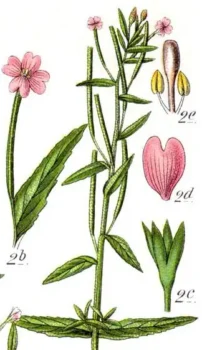
Dwarf Willowherb: A Modest Perennial for Moist Garden Spots
If you’ve ever wandered through a damp meadow or along a stream bank and noticed a small, unassuming plant with tiny pink flowers, you might have encountered dwarf willowherb (Epilobium obscurum). This petite perennial belongs to the evening primrose family and has quietly made its home in parts of North America, though it originally hails from across the pond.
What Is Dwarf Willowherb?
Dwarf willowherb is a herbaceous perennial forb – essentially a non-woody plant that dies back to the ground each winter and returns the following spring. True to its name, this is one of the smaller members of the willowherb family, typically staying quite low to the ground with a modest, spreading habit.
As a non-native species that was introduced to North America, dwarf willowherb has established itself in the wild and can reproduce without human intervention. Currently, it’s been documented growing in Michigan, though it may be present in other areas as well.
- Species observed
- No observations
Garden Appeal and Landscape Role
Let’s be honest – dwarf willowherb isn’t going to win any beauty contests in your garden. Its small, pale pink to white flowers are quite inconspicuous, and its simple leaves won’t create dramatic foliage displays. However, this humble plant does have its place in certain garden situations:
- Naturalized or wild garden areas where you want authentic-looking ground cover
- Moist spots where other plants might struggle
- Areas where you’re trying to establish plant communities that support small pollinators
Growing Conditions and Care
If you’re considering adding dwarf willowherb to your landscape, here’s what this little plant prefers:
Moisture: This plant loves consistently moist to wet soil conditions. Think boggy areas, stream banks, or those perpetually damp spots in your yard where other plants might rot.
Light: Dwarf willowherb is fairly flexible with light conditions, tolerating everything from partial shade to full sun, though it seems to appreciate some protection during the hottest parts of the day.
Hardiness: Based on its European origins and presence in northern climates, this plant likely thrives in USDA zones 3-8, making it quite cold-hardy.
Planting and Maintenance
Once established, dwarf willowherb is refreshingly low-maintenance. It spreads naturally through seeds and may also spread vegetatively, so you won’t need to fuss over it much. In fact, you might find yourself managing its spread rather than encouraging it!
The plant typically flowers from mid to late summer, producing small clusters of tiny flowers that, while not showy, do provide nectar for small pollinators like flies and diminutive bees.
Should You Plant Dwarf Willowherb?
Here’s the thing about dwarf willowherb – it’s not going to transform your garden into a showstopper, and as a non-native species, it’s not providing the same ecological benefits as indigenous plants. If you’re looking to create habitat for native wildlife or support local ecosystems, you’d be better served by choosing native alternatives.
Consider these native options instead:
- Native willowherb species like fireweed (Chamaenerion angustifolium)
- Wild bergamot (Monarda fistulosa) for moist, sunny spots
- Blue flag iris (Iris versicolor) for wet areas
- Cardinal flower (Lobelia cardinalis) for stream banks and wet soils
However, if dwarf willowherb has already established itself on your property, don’t panic. While its invasive status isn’t well-documented, it doesn’t appear to be causing major ecological disruption. You can choose to leave it be or gradually replace it with native species over time.
The Bottom Line
Dwarf willowherb is one of those plants that flies under the radar – not particularly beautiful, not particularly problematic, just quietly doing its thing in moist corners of the landscape. While it won’t harm your garden, it won’t revolutionize it either. For most gardeners interested in creating vibrant, ecologically beneficial spaces, investing in native plant alternatives will yield much more rewarding results for both you and local wildlife.