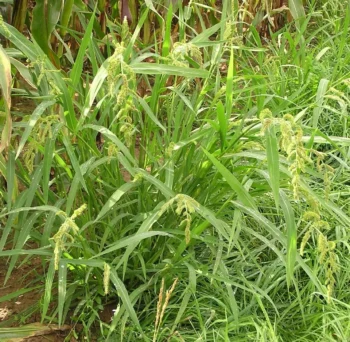
Early Water Grass: A Wetland Annual Worth Considering (With Caution)
If you’ve ever wandered through wetland areas in warmer regions and noticed a slender, grass-like plant thriving in soggy conditions, you might have encountered early water grass (Echinochloa oryzoides). This annual graminoid has quietly established itself across several states and territories, though it’s not exactly what you’d call a garden superstar.
What Exactly Is Early Water Grass?
Early water grass is an annual grass that belongs to the graminoid family – that’s botanist-speak for grass and grass-like plants. Think of it as nature’s way of creating a living sponge that soaks up excess water while adding some green texture to wet areas. It’s not the showiest plant in the garden, but it certainly knows how to make itself at home in waterlogged conditions.
Where You’ll Find It Growing Wild
This adaptable grass has made itself comfortable in California, Hawaii, Guam, and Palau. However, here’s the thing – early water grass isn’t actually native to these places. It originally hails from tropical and subtropical Asia but has successfully established itself in these new territories, reproducing on its own without any help from humans.
- Species observed
- No observations
The Good, The Bad, and The Soggy
Why you might consider it:
- Thrives in consistently wet conditions where other plants struggle
- Annual growth habit means it won’t become a permanent fixture
- Adds texture to water gardens and wetland areas
- Low maintenance once established in suitable conditions
Why you might want to skip it:
- Limited ornamental appeal compared to native alternatives
- Non-native status means it doesn’t support local ecosystems as effectively
- Can spread readily in ideal conditions
- Offers minimal benefits to pollinators (it’s wind-pollinated)
Growing Conditions That Make It Happy
Early water grass is pretty specific about its needs, which actually makes it easier to manage. Here’s what it loves:
- Water, water everywhere: This plant is classified as Obligate Wetland in most regions, meaning it almost always needs wet conditions to thrive
- Full sun: Give it plenty of bright light for best growth
- Warm temperatures: Best suited for USDA hardiness zones 9-11
- Rich, moist soil: The soggier, the better
Planting and Care Tips
If you decide to give early water grass a try, here’s how to set it up for success:
- Plant in spring after the last frost in consistently moist to wet soil
- Choose locations near water features, rain gardens, or naturally boggy areas
- Ensure adequate drainage to prevent stagnant water conditions
- Minimal fertilization needed – it’s adapted to nutrient-rich wetland soils
- Monitor spread, especially in ideal growing conditions
Consider Native Alternatives Instead
Before committing to early water grass, consider exploring native wetland grasses and sedges that offer similar benefits while supporting local wildlife. Native alternatives typically provide better habitat for local birds, beneficial insects, and other wildlife while requiring less management in the long run.
Some excellent native options for wet areas include various sedges (Carex species), native rushes (Juncus species), and region-appropriate wetland grasses that have evolved alongside local ecosystems.
The Bottom Line
Early water grass can serve a functional role in specific wetland gardening situations, but it’s not necessarily the most exciting or ecologically beneficial choice available. If you’re dealing with persistently wet areas and need something that can handle the conditions, it might work – but take some time to research native alternatives first. Your local wildlife (and your garden’s ecosystem) will thank you for choosing plants that have been part of the neighborhood for thousands of years rather than recent arrivals.