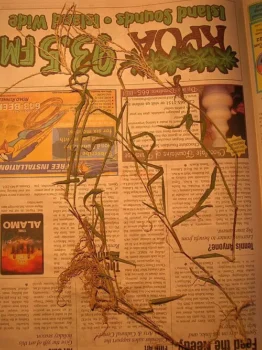
Non-native Plants

East Indian Crabgrass

Digitaria setigera

USDA symbol: DISE6

annual grass

Hawaii: non-native, naturalized
Lower 48 states: non-native, naturalized
Pacific Basin excluding Hawaii: native in some areas, naturalized in others
Puerto Rico: non-native, naturalized

If you’ve noticed a persistent, spreading grass in your garden that seems to pop up everywhere, you might be dealing with East Indian crabgrass (Digitaria setigera). This non-native grass has made itself quite at home in warmer regions of the United States, and understanding what it is can help you ...

East Indian Crabgrass: What Every Gardener Should Know About This Non-Native Grass

If you’ve noticed a persistent, spreading grass in your garden that seems to pop up everywhere, you might be dealing with East Indian crabgrass (Digitaria setigera). This non-native grass has made itself quite at home in warmer regions of the United States, and understanding what it is can help you make informed decisions about your landscape.

What is East Indian Crabgrass?

East Indian crabgrass is a graminoid – that’s the fancy term for grass-like plants. Originally from tropical regions of Asia and Africa, this annual to perennial grass has established itself in several U.S. locations including Florida, Hawaii, Puerto Rico, and various Pacific territories like Guam and Palau. You might also see it listed under its scientific synonyms, including Digitaria microbachne or Digitaria pruriens in older references.

  • Species observed
  • No observations

Where You’ll Find It Growing

This adaptable grass shows up in a variety of environments depending on where you live:

  • In Atlantic and Gulf Coastal Plain regions: Can grow in both wet and dry areas
  • In Caribbean locations: Prefers drier, upland areas
  • In Hawaii: Flexible about moisture, growing in various conditions

Should You Plant East Indian Crabgrass?

Here’s the short answer: probably not intentionally. While this grass isn’t officially listed as invasive or noxious, it’s definitely not native to North America. As a non-native species that reproduces and spreads on its own, it can potentially compete with our native plants that wildlife depends on.

If you’re looking for grass options for your landscape, consider these native alternatives instead:

  • Native bunch grasses suited to your specific region
  • Indigenous sedges that provide similar texture
  • Local prairie grasses that support native wildlife

Managing East Indian Crabgrass

If this grass has already established itself in your yard, don’t panic. While it’s persistent, it’s manageable with consistent care:

  • Hand-pull small patches when soil is moist
  • Maintain healthy, dense plantings of desirable plants to reduce open spaces
  • Consider overseeding with native grasses to outcompete unwanted species

The Bottom Line

East Indian crabgrass is one of those plants that’s neither hero nor villain – it’s just a non-native grass doing what grasses do best: surviving and spreading. While it won’t harm your garden directly, choosing native alternatives will better support local ecosystems and give you more interesting options for your landscape design.

When planning your garden, remember that native plants are almost always the better choice. They’re adapted to local conditions, support native wildlife, and often require less maintenance once established. Your local native plant society or extension office can help you identify the best native grass options for your specific area and growing conditions.

Digitaria setigera is also known as...

Often we refer to plants by their common names. When shopping for plants the scientific name is the best way to positively identify the plant species you desire. But some plants have more than one name! While it doesn't happen often, nurseries might display one name while you're searching for another. Digitaria setigera is also known as:

Digitaria microbachne | USDA symbol: DIMI6
Digitaria pruriens Büse | USDA symbol: DIPR
Digitaria pruriens Büse var. microbachne | USDA symbol: DIPRM

Why do some plants have more than one name? Over time plant species may be renamed for a few reasons:

  1. Botanists in different regions named the same plant without knowing it had already been classified.
  2. A species was reclassified after scientific advances in, for example, DNA analysis.
  3. Slight variations within a species are sometimes mistakenly identified as entirely new species.

Wetland Status

The rule of seasoned gardeners and landscapers is to choose the "right plant for the right place" — matching plants to their ideal growing conditions, so they'll thrive with less care and fewer inputs. But the simplicity of this catchphrase conceals how tricky plant selection can be if you don't have the right information. While tags on nursery plants list watering requirements, there's more to the story.

Knowing a plant's wetland status can simplify the process by revealing the interaction between plants, water, and soil. You might be surprised to learn that popular landscape plants are wetland species! And what may be a wetland plant in one area, in another it might thrive in drier conditions. The table below gives insight into the preferred growing conditions of this plant throughout its geographical distribution.

Region
Preferred Habitat

Atlantic and Gulf Coastal Plain (AL, AR, DC, DE, FL, GA, IL, KY, LA, MD, MS, MO, NC, NJ, OK, PA, SC, TN, TX, VA)

Facultative

Caribbean (PR, VI)

Obligate Upland

Hawaii ()

Facultative
Wetland Glossary
Obligate Wetland
Facultative Wetland
Facultative
Facultative Upland
Obligate Upland
Almost always occurs in wetlands
Usually occurs in wetlands but may occur in non-wetlands
Can occur in wetlands and non-wetlands
Usually occurs in non-wetlands but may occur in wetlands
Almost never occurs in wetlands

Classification

Group: Monocot
Kingdom: Plantae - Plants
Subkingdom: Tracheobionta - Vascular plants
Superdivision: Spermatophyta - Seed plants
Division: Magnoliophyta - Flowering plants
Class: Liliopsida - Monocotyledons
Subclass: Commelinidae
Order: Cyperales
Family: Poaceae Barnhart - Grass family
Genus: Digitaria Haller - crabgrass

Species: Digitaria setigera Roth ex Roem. & Schult. - East Indian crabgrass

Plant data source: USDA, NRCS 2025. The PLANTS Database. https://plants.usda.gov,. 2/25/2025. National Plant Data Team, Greensboro, NC USA