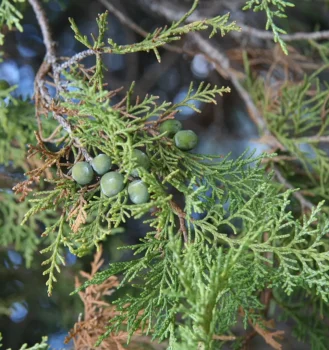
Eastern Juniper: A Hardy Evergreen for Challenging Gardens
If you’re looking for a tough-as-nails evergreen that can handle harsh conditions while still looking dignified in your landscape, let me introduce you to the eastern juniper (Juniperus polycarpos). This resilient conifer might not be the flashiest tree on the block, but it’s got staying power that would make a marathon runner jealous.
What Is Eastern Juniper?
Eastern juniper is an evergreen conifer that belongs to the cypress family. You might also see it listed under its scientific synonym, Juniperus seravschanica, in some older gardening references. This tree brings that classic juniper look to your landscape – think scale-like foliage that stays green year-round and those distinctive blue-black berries (technically cones) that appear on mature plants.
Where Does It Come From?
This juniper species hails from Central Asia, calling places like Iran, Afghanistan, Pakistan, and various Central Asian republics home. It’s adapted to some pretty challenging climates in its native range, which explains its impressive drought tolerance and ability to thrive where other trees might throw in the towel.
Why Consider Eastern Juniper for Your Garden?
Here’s where this tree really shines – it’s practically bulletproof once established. The eastern juniper offers several compelling reasons to earn a spot in your landscape:
- Exceptional drought tolerance after the first year
- Attractive reddish-brown bark that adds winter interest
- Dense evergreen foliage provides year-round structure
- Blue-black berries offer visual appeal and wildlife food
- Excellent for erosion control on slopes
- Makes an effective windbreak or privacy screen
Garden Design Ideas
Eastern juniper works beautifully as a specimen tree in larger landscapes, where it has room to show off its natural form. It’s also fantastic for Mediterranean-style or xerophytic gardens where water conservation is key. Consider using it as part of a windbreak planting, or let it anchor a corner of your property where you need something substantial but low-maintenance.
This tree is best suited for spacious properties rather than small urban lots, as it can grow quite large over time. It’s perfect for that bones of the landscape role – providing structure and permanence while other plants come and go with the seasons.
Growing Conditions and Care
The good news is that eastern juniper isn’t particularly fussy about its growing conditions. Here’s what it needs to thrive:
- Sunlight: Full sun for best growth and form
- Soil: Well-draining soil is essential – it won’t tolerate soggy conditions
- Water: Drought tolerant once established, but water regularly during the first year
- Hardiness: Suitable for USDA zones 7-9
Planting and Care Tips
Spring is your best bet for planting eastern juniper, giving it a full growing season to establish before facing winter. Here are some key care points:
- Plant in well-draining soil – this is non-negotiable for junipers
- Water consistently during the first year, then back off as it establishes
- Minimal pruning needed – just remove dead or damaged branches
- Mulch around the base to retain moisture and suppress weeds
- Be patient – this tree is slow to moderate in growth rate
Wildlife and Ecological Considerations
While eastern juniper isn’t native to North America, it does provide some wildlife benefits once established. Birds may use the berries as food, and the dense foliage can offer shelter. However, since this species isn’t native to our region, you might want to consider native juniper alternatives like Eastern Red Cedar (Juniperus virginiana) or Rocky Mountain Juniper (Juniperus scopulorum), depending on your location.
The Bottom Line
Eastern juniper is a solid choice if you need a reliable evergreen for challenging conditions and have the space for it to mature. It won’t win any contests for fast growth or flashy flowers, but sometimes what you really need is a dependable plant that just quietly does its job year after year. Just remember to consider native alternatives first – your local ecosystem will thank you for it!