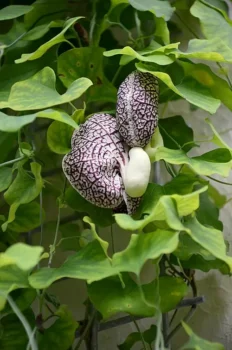
Elegant Dutchman’s Pipe: A Climbing Vine with Curious Flowers
If you’re looking for a conversation starter in your garden, the elegant dutchman’s pipe (Aristolochia elegans) might just be your answer. This perennial climbing vine produces some of the most unusual flowers you’ll ever see – burgundy and cream pipe-shaped blooms that look like tiny works of art. But before you rush to plant one, let’s explore what makes this South American native tick and whether it’s right for your garden.
What Is Elegant Dutchman’s Pipe?
Elegant dutchman’s pipe is a twining, climbing vine that can quickly cover fences, trellises, and arbors with its heart-shaped leaves and peculiar flowers. Originally from Brazil and other parts of South America, this plant has found its way into gardens across warmer regions of the United States, including Florida, Hawaii, Puerto Rico, and the U.S. Virgin Islands.
The plant is non-native to these areas and has established itself in the wild, reproducing without human assistance. While it’s not currently listed as invasive or noxious, it’s worth considering native alternatives that provide similar benefits to local ecosystems.
- Species observed
- No observations
The Flowers That Stop Traffic
The real showstopper of this vine is its flowers. These burgundy and cream-colored blooms are shaped like tiny smoking pipes – hence the dutchman’s pipe name. The flowers have intricate patterns and markings that almost look hand-painted. They’re designed to attract flies and small insects for pollination, though they can sometimes trap these pollinators temporarily.
Growing Conditions and Care
If you decide to grow elegant dutchman’s pipe, here’s what it needs to thrive:
- Climate: Hardy in USDA zones 9-11; can be grown as an annual or houseplant in cooler areas
- Light: Full sun to partial shade
- Soil: Well-draining soil that doesn’t stay soggy
- Water: Regular watering, but allow soil to dry between waterings
- Support: Provide a sturdy trellis, fence, or arbor for climbing
Wetland Preferences
This plant strongly prefers upland conditions. In most regions where it grows, elegant dutchman’s pipe almost never occurs in wetlands, making it unsuitable for rain gardens or bog plantings. In Hawaii, it may occasionally tolerate slightly wetter conditions but still prefers drier sites.
Planting and Maintenance Tips
Growing elegant dutchman’s pipe successfully requires some attention to detail:
- Plant in spring after the last frost date
- Install support structures before planting – this vine grows vigorously
- Prune regularly to control growth and prevent it from overwhelming other plants
- In cooler climates, grow in containers and bring indoors for winter
- Watch for frost damage and protect accordingly
Garden Design Considerations
Elegant dutchman’s pipe works well in tropical and subtropical garden designs where you want to add vertical interest and unusual flowers. It’s particularly effective on pergolas, garden gates, or as a screening plant. However, its vigorous growth means it needs regular management to prevent it from taking over.
Should You Plant It?
While elegant dutchman’s pipe can be an interesting addition to warm-climate gardens, consider these factors:
Pros: Unique flowers, fast coverage, interesting conversation piece
Cons: Non-native, vigorous growth requires management, limited cold tolerance
Native Alternatives to Consider
Before planting elegant dutchman’s pipe, consider these native climbing alternatives that support local wildlife:
- Coral honeysuckle (Lonicera sempervirens) – Native vine with tubular red flowers loved by hummingbirds
- American groundnut (Apios americana) – Native vine with fragrant purple flowers
- Cross vine (Bignonia capreolata) – Native evergreen vine with orange-red trumpet flowers
The Bottom Line
Elegant dutchman’s pipe is undeniably fascinating, but it’s worth weighing its ornamental value against the benefits of native alternatives. If you do choose to grow it, be prepared for regular maintenance and consider its non-native status in your garden planning. Whatever you decide, make sure you’re ready for the questions those bizarre and beautiful flowers are sure to generate!