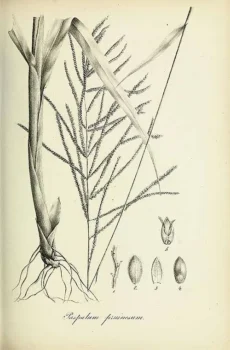
Emperor Crowngrass: What You Need to Know About This Non-Native Grass
Meet Emperor crowngrass (Paspalum coryphaeum), a perennial grass that’s made its way into select regions of the United States. While it may sound regal with a name like Emperor, this grass species remains somewhat of a mystery in the gardening world, with limited information available about its specific characteristics and garden performance.
Where You’ll Find Emperor Crowngrass
This non-native grass has established itself in just two states: Florida and North Carolina. As an introduced species that reproduces spontaneously in the wild, it has managed to persist in these southeastern locations without human intervention.
- Species observed
- No observations
What Makes It Tick
Emperor crowngrass belongs to the Poaceae family, making it a true grass rather than a grass-like imposter. As a perennial, it returns year after year once established, though specific details about its size, growth rate, and appearance are not well-documented in horticultural literature.
Should You Plant Emperor Crowngrass?
Here’s where things get interesting (and a bit complicated). Since this is a non-native species with limited available information about its garden performance, invasive potential, or specific growing requirements, it’s difficult to give a definitive recommendation either way.
What we do know:
- It’s established in Florida and North Carolina
- It’s a perennial grass that can self-sustain
- Detailed horticultural information is scarce
- Its invasive status is unknown
Consider Native Alternatives
Given the limited information about Emperor crowngrass and its non-native status, you might want to consider native grass alternatives that offer similar benefits with better-documented garden performance. Some excellent native grass options include:
- Little bluestem (Schizachyrium scoparium)
- Buffalo grass (Poaceae dactyloides) in suitable climates
- Purple lovegrass (Eragrostis spectabilis)
- Regional native Paspalum species
The Bottom Line
Emperor crowngrass remains something of an enigma in the plant world. While it’s established itself in a couple of southeastern states, the lack of detailed information about its garden characteristics, growing requirements, and potential impacts makes it a questionable choice for most gardeners.
If you’re set on exploring this species, proceed with caution and consider starting with native alternatives that offer proven garden performance and ecological benefits. Your local extension office or native plant society can help you identify the best native grasses for your specific region and garden goals.
Sometimes the most responsible choice is to stick with what we know works well – and in the plant world, that often means going native!