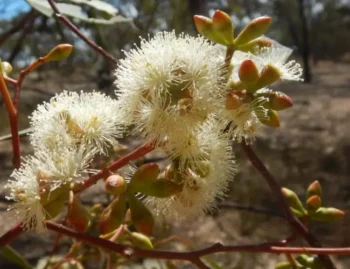
Grey Box (Eucalyptus microcarpa): A Stately Australian Native for Spacious Landscapes
If you’re looking for a drought-tolerant tree that can handle tough conditions while providing excellent shade, the Grey Box might just be your new best friend. This Australian native has been winning hearts worldwide with its distinctive bark and hardy nature, though it’s definitely not a tree for small spaces!
What Is Grey Box?
Grey Box, scientifically known as Eucalyptus microcarpa, is a medium to large eucalyptus tree that’s as tough as nails. You might also see it listed under its botanical synonym, Eucalyptus woollsiana. This tree is famous for its beautiful smooth grey bark that peels away in irregular patches, creating an attractive mottled pattern that changes throughout the seasons.
Where Does It Come From?
Grey Box is native to eastern Australia, where it naturally occurs across New South Wales, Victoria, Queensland, and South Australia. In its homeland, it’s a common sight in woodlands and open forests, often growing alongside other eucalyptus species.
Why You Might Want to Plant Grey Box
There are several compelling reasons to consider this tree for your landscape:
- Drought tolerance: Once established, Grey Box laughs in the face of dry spells
- Fast growth: You won’t be waiting decades for shade
- Low maintenance: Perfect for gardeners who prefer a plant it and forget it approach
- Attractive bark: The mottled grey trunk provides year-round visual interest
- Wildlife friendly: Birds love the seeds, and bees appreciate the flowers
- Excellent windbreak: Great for protecting other plants or buildings
Why You Might Want to Think Twice
Before you rush to the nursery, consider these potential drawbacks:
- Size matters: This tree can reach 60-80 feet tall with a 40-50 foot spread – not exactly apartment balcony material
- Root considerations: Like many eucalyptus, it can have aggressive roots that might not play well with foundations or pipes
- Not native everywhere: If you’re gardening outside Australia, consider native alternatives that support local ecosystems
- Climate requirements: Only suitable for USDA zones 9-11, so cold-climate gardeners need not apply
What It Looks Like
Grey Box is a handsome tree that earns its keep through both form and function. The star of the show is definitely that gorgeous bark – smooth and grey with a tendency to shed in patches, revealing lighter colors underneath. The small, white flowers appear in clusters and, while not showy from a distance, are quite charming up close and absolutely beloved by pollinators.
Perfect Spots for Grey Box
This tree thrives in:
- Large residential properties with plenty of space
- Rural or acreage settings
- Parks and public spaces
- Drought-tolerant landscape designs
- Areas needing windbreaks or screening
Growing Conditions
Grey Box is refreshingly unfussy about its growing conditions. It prefers full sun and well-draining soil but isn’t particularly picky about soil type. The key is good drainage – soggy feet are about the only thing that will make this tough tree unhappy. Once established, it can handle drought like a champion, making it perfect for water-wise gardening.
Planting and Care Tips
Getting your Grey Box off to a good start is pretty straightforward:
- Location, location, location: Choose a spot with plenty of room for growth, away from structures and underground utilities
- Planting time: Fall or early spring are ideal planting times
- Water wisely: Provide regular water for the first year, then taper off as the tree establishes
- Mulch matters: A layer of mulch around the base helps retain moisture and suppress weeds
- Pruning: Minimal pruning needed – just remove dead or damaged branches
- Fertilizer: Generally unnecessary once established, especially in decent soil
Wildlife and Pollinator Benefits
While Grey Box might not be native to your area, it still provides some benefits to local wildlife. The flowers are excellent nectar sources for bees and other pollinators, appearing at times when other food sources might be scarce. Birds enjoy the small seeds, and the tree’s size and structure make it attractive for nesting.
The Bottom Line
Grey Box is an excellent choice if you have the space and live in the right climate. It’s a low-maintenance tree that provides excellent shade, looks great year-round, and can handle tough conditions. However, if you’re gardening outside of Australia, consider exploring native alternatives that might provide similar benefits while supporting your local ecosystem. Native trees are always the gold standard for supporting local wildlife and maintaining ecological balance.
Whether you choose Grey Box or a native alternative, the most important thing is selecting a tree that fits your space, climate, and gardening goals. Happy planting!