European Bedstraw: A Delicate Ground Cover with Old-World Charm
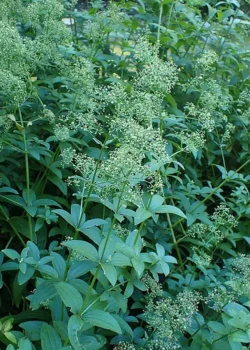
If you’ve ever wondered about those tiny white flowers that seem to carpet certain areas with delicate, star-like blooms, you might be looking at European bedstraw (Galium rubioides). This unassuming perennial forb brings a touch of European countryside charm to American gardens, though it comes with some considerations for the native plant enthusiast.
What Exactly Is European Bedstraw?
European bedstraw is a non-native perennial herb that belongs to the coffee family (Rubiaceae). As a forb, it’s an herbaceous plant without woody stems, meaning it dies back to the ground each winter and regrows from its roots come spring. Don’t let its humble appearance fool you – this little plant has quite a history of naturalizing in new environments.
Where You’ll Find It Growing Wild
Currently, Galium rubioides has established itself in Pennsylvania, where it reproduces on its own without human intervention. This ability to self-sustain in the wild is typical of many introduced species that find favorable conditions in their new homes.
- Species observed
- No observations
The Garden Appeal (Or Lack Thereof)
Let’s be honest – European bedstraw isn’t going to win any beauty contests. Its appeal lies more in its subtle charm than showstopping looks. The plant produces clusters of small, white, four-petaled flowers that create a delicate carpet effect when grown in masses. It’s the kind of plant that whispers rather than shouts, perfect for gardeners who appreciate understated elegance.
Key characteristics include:
- Small white flowers arranged in loose clusters
- Fine-textured foliage
- Low-growing, spreading habit
- Perennial growth pattern
Where It Fits in Your Landscape
European bedstraw works best in naturalized settings where its spreading nature can be an asset rather than a concern. Consider it for:
- Meadow gardens
- Naturalized areas
- Cottage garden settings
- Areas where you want soft, informal ground coverage
Growing Conditions and Care
Like many members of the bedstraw family, Galium rubioides is relatively adaptable and low-maintenance once established. While specific growing requirements for this species are not well-documented, it likely prefers:
- Full sun to partial shade
- Well-draining soil
- USDA hardiness zones 4-8 (estimated)
- Minimal fertilization
The plant’s low-maintenance nature makes it suitable for gardeners who prefer a hands-off approach, though this same characteristic means it can spread beyond where you originally planted it.
A Word About Native Alternatives
While European bedstraw isn’t currently listed as invasive, it’s worth considering native alternatives that provide similar aesthetic benefits while supporting local ecosystems. Some excellent native options include:
- Wild bergamot (Monarda fistulosa) for white flower clusters
- White wild indigo (Amorpha alba) for delicate white blooms
- Partridgeberry (Mitchella repens) for low-growing ground cover
The Bottom Line
European bedstraw occupies an interesting middle ground in the gardening world. It’s not aggressive enough to be considered problematic, but it’s not native enough to be a top choice for wildlife-focused gardens. If you’re drawn to its subtle charm and have a naturalized area where it can settle in without displacing native plants, it can be a pleasant addition to your landscape palette.
However, if you’re prioritizing native plants for their ecological benefits, you’ll find better options among our indigenous flora. The choice ultimately depends on your gardening philosophy and what role you want your garden to play in supporting local wildlife and ecosystems.