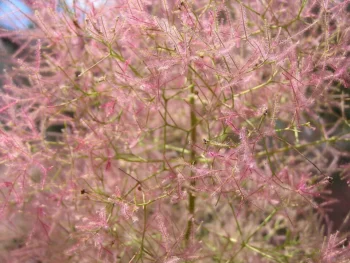
European Smoketree: The Dramatic Shrub That Creates Garden Magic
If you’ve ever wanted to add a touch of mystery and drama to your landscape, the European smoketree might just be your perfect match. This distinctive shrub earns its common name from the billowy, smoke-like flower clusters that seem to float above its branches like morning mist. But there’s much more to this eye-catching plant than its signature smoke show.
What Exactly Is a European Smoketree?
The European smoketree (Cotinus coggygria) is a deciduous shrub that typically grows 13-16 feet tall, though it can reach greater heights under ideal conditions. As a perennial woody plant with multiple stems arising from the ground, it creates a substantial presence in any garden setting. You might also encounter this plant listed under its botanical synonym, Rhus cotinus.
Where Does It Come From?
Originally native to southern Europe, central China, and the Himalayas, the European smoketree has found its way into North American gardens and landscapes. As a non-native species, it has established itself across several states including Ontario, Connecticut, Illinois, Maryland, Massachusetts, New Jersey, New York, Ohio, Pennsylvania, Utah, and Vermont, where it reproduces naturally and persists in the wild.
- Species observed
- No observations
The Visual Appeal: Why Gardeners Fall in Love
The European smoketree offers a spectacular two-season show that keeps gardeners coming back for more:
- Summer Drama: The plant produces airy, feathery flower plumes that create a hazy, smoke-like effect above the foliage
- Fall Finale: Leaves transform into a brilliant display of orange, red, and purple hues
- Unique Texture: The wispy flower clusters add an unusual textural element that contrasts beautifully with more traditional garden plants
Perfect Garden Roles and Landscape Uses
This versatile shrub excels in several landscape applications:
- Specimen plant for focal points and accent areas
- Background planting in mixed borders
- Xerophytic and Mediterranean-style gardens
- Low-maintenance landscape designs
- Areas where dramatic seasonal interest is desired
Growing Conditions: Surprisingly Easy-Going
One of the European smoketree’s greatest strengths is its adaptability. This tough shrub thrives in:
- Light: Full sun for best flowering and fall color
- Soil: Well-drained soils, including poor and alkaline conditions
- Water: Drought-tolerant once established (avoid overwatering)
- Climate: Hardy in USDA zones 4-8
Planting and Care: Low-Maintenance Beauty
The European smoketree rewards gardeners with minimal fuss:
- Plant in spring or fall when temperatures are moderate
- Water regularly during the first growing season to establish roots
- Once established, it’s remarkably drought-tolerant
- Prune in late winter or early spring if needed to maintain shape
- Avoid fertilizing, as rich soils can reduce flowering
Wildlife and Pollinator Benefits
During its blooming period, the European smoketree attracts bees and other pollinators to its flowers, adding ecological value to your garden ecosystem.
Should You Plant It?
The European smoketree offers undeniable beauty and requires minimal care once established, making it appealing for many gardeners. However, as a non-native species, consider balancing your landscape with native alternatives that provide similar benefits to local ecosystems. Native options like American smoketree (Cotinus obovatus) or native sumacs can offer comparable visual interest while supporting local wildlife more effectively.
If you do choose to plant European smoketree, you’ll be rewarded with a low-maintenance shrub that delivers maximum visual impact with minimal effort – perfect for gardeners who want drama without the fuss.