European Speedwell: A Water-Loving Ground Cover for Wet Gardens
If you’ve got a soggy spot in your yard that seems impossible to landscape, European speedwell (Veronica beccabunga) might just be the solution you’ve been looking for. This cheerful little perennial thrives where many other plants would throw in the towel – in consistently wet, even waterlogged conditions.
What is European Speedwell?
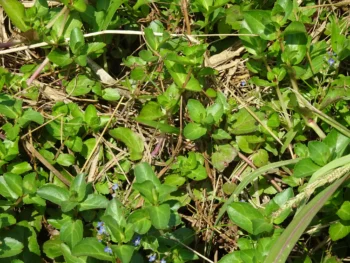
European speedwell is a low-growing perennial forb that forms spreading mats of bright green foliage topped with small, delicate blue flowers. As its name suggests, this plant isn’t native to North America – it originally hails from Europe and western Asia. However, it has naturalized across much of the northern United States and southern Canada, establishing itself in wetlands and along waterways.
Where Does It Grow?
You’ll find European speedwell growing wild in these states and provinces: California, Connecticut, Illinois, Louisiana, Maine, Maryland, Massachusetts, Michigan, Nevada, New Jersey, New York, Ohio, Pennsylvania, Virginia, West Virginia, Wisconsin, Ontario, and Quebec. It has earned an Obligate Wetland status across all regions, meaning it almost always occurs in wetland conditions.
- Species observed
- No observations
Why Consider European Speedwell for Your Garden?
Here’s where European speedwell really shines – it’s practically bulletproof in wet conditions. If you have a rain garden, pond margin, or that perpetually soggy corner of your yard, this plant will happily call it home. Its spreading habit creates a dense mat that can help prevent soil erosion, and the small blue flowers add a subtle splash of color from late spring through summer.
The flowers attract small pollinators like flies and tiny bees, though it’s not a major pollinator magnet. Think of it more as a reliable supporting cast member than the star of your pollinator garden.
Growing Conditions and Care
European speedwell is remarkably easy to please, as long as you meet its one non-negotiable requirement: water. Here’s what it needs:
- Moisture: Consistently wet to waterlogged soil – this plant lives for soggy conditions
- Light: Full sun to partial shade (though it flowers best with some sun)
- Soil: Any soil type, as long as it stays moist
- Hardiness: USDA zones 3-9
Planting and Maintenance Tips
Once established, European speedwell pretty much takes care of itself. It spreads by runners, creating new plants as it goes, so you may need to keep an eye on it if you want to contain its spread. After the flowers fade, you can cut the plant back to encourage fresh growth, though this isn’t strictly necessary.
The plant typically grows 6-12 inches tall and can spread 2-3 feet wide, making it an excellent ground cover for larger wet areas.
A Word About Native Alternatives
While European speedwell isn’t considered invasive, you might want to consider native alternatives that provide similar benefits while supporting local ecosystems. Some excellent native options for wet areas include wild bergamot, cardinal flower, blue flag iris, or native sedges, depending on your region.
The Bottom Line
European speedwell won’t win any awards for being the most spectacular garden plant, but it’s a solid choice for challenging wet spots where other plants struggle. If you need reliable ground cover for a rain garden, pond edge, or perpetually damp area, this undemanding perennial delivers consistent performance with minimal fuss. Just remember to give it the wet feet it craves, and it’ll reward you with years of steady, if understated, beauty.