Fairy Flax: A Delicate European Charmer for Your Garden
If you’re looking for a dainty wildflower that brings old-world charm to your garden, fairy flax (Linum catharticum) might just capture your heart. This petite annual creates clouds of tiny white flowers that dance in the breeze, earning its whimsical common name and a devoted following among gardeners who appreciate subtle beauty.
What Is Fairy Flax?
Fairy flax is a delicate annual forb—essentially a non-woody flowering plant—that belongs to the flax family. Despite its common name, don’t expect the tall, blue blooms of regular flax. This little charmer grows much smaller and produces masses of tiny white flowers that are simply enchanting when viewed up close.
Originally from Europe, fairy flax has made itself at home in parts of eastern North America, where it grows wild in meadows and grasslands. You might also see it listed under its botanical synonym, Cathartolinum catharticum, though most gardeners stick with the more pronounceable fairy flax.
Where Does Fairy Flax Grow?
In North America, fairy flax has established populations across the northeastern regions, including the Maritime provinces of Canada (New Brunswick, Nova Scotia, Prince Edward Island), as well as Ontario, Quebec, and Newfoundland. In the United States, you’ll find it naturalized in Maine, Massachusetts, Michigan, New Hampshire, New York, Pennsylvania, and Vermont.
- Species observed
- No observations
The Appeal of Fairy Flax
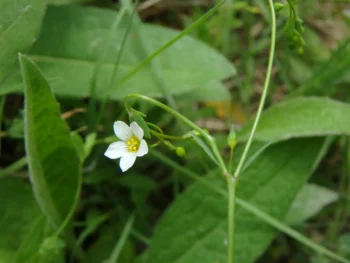
What fairy flax lacks in size, it makes up for in charm. The plant typically reaches just 6-12 inches tall, with narrow, small leaves and stems that seem almost thread-like. From June through September, it produces countless tiny white flowers, each about the size of your pinky nail, with five delicate petals that create a cloud-like effect when planted in groups.
The flowers are particularly appealing to small pollinators like flies and tiny bees, making this plant a valuable addition to pollinator-friendly gardens. While individual flowers are small, the collective display can be quite striking, especially when naturalized in larger areas.
Growing Fairy Flax Successfully
One of fairy flax’s best qualities is its easy-going nature. This little plant thrives in conditions that might challenge other flowers:
- Soil: Prefers well-drained, alkaline to neutral soils but tolerates poor conditions
- Light: Best in full sun but accepts partial shade
- Water: Drought tolerant once established; avoid overwatering
- Climate: Hardy in USDA zones 3-8
Planting and Care Tips
Fairy flax is refreshingly low-maintenance. Here’s how to grow it successfully:
- Direct seed in spring after the last frost or in fall for spring germination
- Scatter seeds lightly over prepared soil—they need light to germinate
- Water gently until seedlings establish, then reduce watering
- Allow plants to self-seed for natural colonies
- No fertilization needed; too-rich soil can actually reduce flowering
As an annual, fairy flax completes its life cycle in one growing season, but it’s an enthusiastic self-seeder, so you’ll likely see it return year after year if conditions are right.
Best Uses in the Garden
Fairy flax shines in several garden settings:
- Wildflower meadows: Perfect for naturalized plantings
- Rock gardens: Thrives in well-drained, lean soils
- Cottage gardens: Adds delicate texture among bolder flowers
- Ground cover: Forms loose carpets in suitable conditions
Should You Plant Fairy Flax?
While fairy flax isn’t native to North America, it’s not considered invasive either. It tends to establish in specific conditions and doesn’t aggressively crowd out native plants. However, if you’re committed to native-only gardening, consider these alternatives that offer similar delicate appeal:
- Wild bergamot (Monarda fistulosa) for pollinator value
- Canada anemone (Anemone canadensis) for white flowers
- Small-flowered agrimony (Agrimonia parviflora) for delicate texture
Fairy flax can be a lovely addition to gardens where you want to create a naturalized, old-world atmosphere. Its self-seeding habit means you’ll get the most value by allowing it space to establish small colonies rather than trying to control it in formal plantings.
The Bottom Line
Fairy flax may not be the showiest flower in your garden, but it brings a special kind of magic—the kind that makes you stop and look closer, appreciating nature’s ability to create beauty in the smallest details. If you have a spot that needs a gentle, self-sufficient annual with pollinator appeal, fairy flax might be just the fairy tale ending your garden needs.