False Baby’s Breath: A Pretty Plant You Should Probably Skip
If you’ve stumbled across false baby’s breath (Galium mollugo) in your gardening research, you might be charmed by its delicate white flowers and easy-going nature. But before you add this European import to your shopping list, there’s something important you should know: this seemingly innocent perennial has a not-so-secret tendency to take over.
What is False Baby’s Breath?
False baby’s breath is a perennial forb that originally hails from Europe and Asia. Unlike our native bedstraws, this non-native cousin has made itself quite at home across North America, spreading far beyond its intended garden boundaries. You’ll find it growing wild everywhere from British Columbia to Newfoundland, and from California to Georgia – basically, it’s everywhere.
- Species observed
- No observations
This adaptable plant is classified as a facultative upland species, meaning it typically prefers drier conditions but can tolerate some moisture. It’s hardy in USDA zones 3-9, making it suitable for most temperate climates.
Why You Might Want to Think Twice
Here’s where things get a bit concerning. In Wisconsin, false baby’s breath is listed as Restricted, which is a polite way of saying it’s considered invasive. When a plant earns this designation, it means it has a proven track record of escaping cultivation and outcompeting native plants in wild areas.
The problem with Galium mollugo isn’t that it’s an ugly plant – quite the opposite, actually. Its clusters of tiny white flowers can be quite lovely, and it forms dense mats that some gardeners find appealing. But this aggressive spreading habit is exactly what makes it problematic in natural ecosystems.
What Does It Look Like?
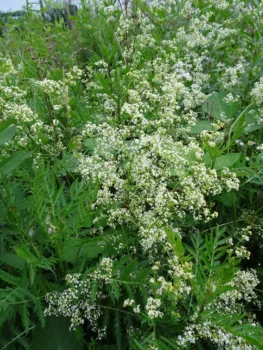
False baby’s breath produces masses of small, four-petaled white flowers arranged in loose, airy clusters. The plant itself forms low-growing mats that can spread extensively through underground stems. While it might remind you of the popular floral filler baby’s breath (Gypsophila), the two plants are actually quite different – hence the false in its common name.
Growing Conditions (If You Absolutely Must)
While we don’t recommend planting false baby’s breath, understanding its growing preferences can help you identify and manage it if it shows up uninvited:
- Thrives in full sun to partial shade
- Adapts to various soil types
- Drought tolerant once established
- Spreads aggressively through underground stems
- Self-seeds readily
Better Native Alternatives
Instead of false baby’s breath, consider these beautiful native alternatives that provide similar aesthetic appeal without the invasive baggage:
- Wild bergamot (Monarda fistulosa) – Offers delicate flowers and attracts beneficial insects
- White wild indigo (Amorpha alba) – Provides airy white flower spikes
- Pearly everlasting (Anaphalis margaritacea) – Delivers long-lasting white blooms
- Native bedstraws (Galium species) – Give you the same plant family without the invasive concerns
The Bottom Line
While false baby’s breath might seem like an easy, pretty addition to your garden, its invasive tendencies make it a poor choice for responsible gardeners. With so many gorgeous native alternatives available, there’s really no need to risk introducing a problem plant to your landscape.
If you already have false baby’s breath in your garden, consider removing it and replacing it with native alternatives. Your local ecosystem (and your gardening neighbors) will thank you for making the switch to plants that support rather than disrupt local biodiversity.
Remember, the best gardens work with nature, not against it. Choose plants that belong in your local ecosystem, and you’ll create a landscape that’s not only beautiful but also beneficial to the world around it.