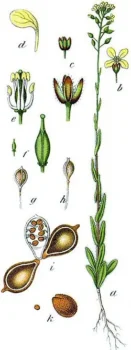
False Flax: A Hardy Annual with Golden Blooms and Ancient History
If you’re looking for a low-maintenance annual that thrives in challenging conditions, false flax (Camelina sativa) might catch your attention. Also known as gold-of-pleasure, this unassuming plant has been cultivating relationships with humans for thousands of years, and it’s ready to bring its quiet charm to modern gardens too.
What is False Flax?
False flax is an annual to biennial forb that belongs to the mustard family. Don’t let the name fool you – it’s not related to true flax at all! This herbaceous plant lacks woody tissue and produces delicate clusters of small, four-petaled yellow flowers that create a subtle but cheerful display in the garden.
As a non-native species originally from Europe and Central Asia, false flax has made itself quite at home across North America. It now grows wild in most U.S. states and Canadian provinces, from Alaska down to Louisiana and from coast to coast. The plant reproduces spontaneously and tends to persist once established, though it’s not considered invasive.
- Species observed
- No observations
Garden Appeal and Characteristics
False flax typically grows 1-3 feet tall with narrow, lance-shaped leaves and airy clusters of tiny yellow blooms. While it won’t win any awards for showstopping beauty, it offers a delicate, cottage garden charm that works well as a filler plant or naturalized groundcover.
The plant’s real superpower lies in its adaptability. False flax is remarkably tolerant of poor soils and drought conditions, making it an excellent choice for challenging garden spots where other plants might struggle.
Growing Conditions and Care
One of false flax’s best qualities is how easy it is to please. Here’s what you need to know:
- Soil: Thrives in well-draining soils but tolerates poor, rocky, or sandy conditions
- Water: Drought tolerant once established; prefers moderate moisture
- Sun: Performs best in full sun to partial shade
- Climate: Cool-season annual suitable for USDA zones 2-7
- Wetland preference: Strongly prefers upland conditions and rarely occurs in wetlands
Planting and Propagation
False flax is refreshingly straightforward to grow:
- Direct seed in early spring or fall when soil temperatures are cool
- Scatter seeds lightly over prepared soil and barely cover
- Seeds typically germinate within 1-2 weeks
- Plants often self-seed for following years
- Minimal care required once established
Wildlife and Pollinator Benefits
While false flax may look modest, it pulls its weight in supporting local ecosystems. The small flowers attract various pollinators, including native bees and beneficial insects. The seeds also provide food for birds, particularly finches and other small seed-eating species.
Should You Grow False Flax?
False flax makes sense for gardeners who:
- Want low-maintenance plants for difficult growing conditions
- Appreciate subtle, naturalized garden aesthetics
- Are interested in plants with historical significance
- Need gap-fillers in cottage or wildflower gardens
- Want to support pollinators with extended bloom periods
However, if you’re passionate about native plant gardening, you might consider alternatives like native mustard family members or other regional wildflowers that provide similar benefits while supporting local ecosystems more directly.
The Bottom Line
False flax won’t dramatically transform your garden, but it offers reliable performance and quiet charm with minimal fuss. Its drought tolerance and ability to thrive in poor soils make it valuable for challenging spots, while its pollinator benefits add ecological value. Whether you choose to grow this ancient crop plant or opt for native alternatives, the most important thing is creating a garden that brings you joy while supporting the natural world around you.