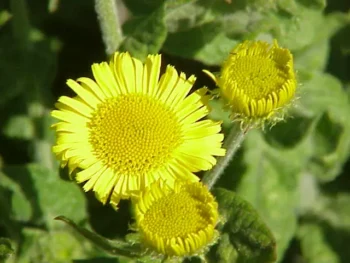
False Fleabane (Pulicaria): An Unassuming Wildflower You Might Already Have
If you’ve ever noticed small, yellow daisy-like flowers popping up in unexpected corners of your garden or along disturbed areas of your property, you might have encountered false fleabane. This humble member of the sunflower family has a knack for showing up uninvited, though it’s generally more curious than problematic.
What Exactly is False Fleabane?
False fleabane (Pulicaria) is a non-native forb that’s made itself quite at home across parts of the United States. As a forb, it’s an herbaceous plant without woody stems – think of it as nature’s version of a hardy annual or perennial herb that keeps things simple and close to the ground.
Originally from the Mediterranean region, Europe, Asia, and parts of Africa, this plant has traveled far from its ancestral home. It now reproduces spontaneously in the wild across Arizona, California, Florida, and Maryland without any human assistance.
- Species observed
- No observations
Should You Welcome It or Worry About It?
Here’s the thing about false fleabane – it’s not going to win any beauty contests, but it’s not necessarily a garden villain either. While it’s classified as non-native, there’s limited information about whether it poses significant invasive threats to native ecosystems. This puts it in a gray area that many gardeners find themselves navigating.
What Does It Look Like?
False fleabane typically presents as:
- Small, yellow daisy-like flowers that are fairly inconspicuous
- Low-growing habit, often forming spreading mats or growing as upright herbs
- Simple foliage without significant woody growth
- A tendency to appear in disturbed soils and waste areas
Where You’re Likely to Find It
Don’t expect to find false fleabane in the pristine corners of your garden. This plant has a preference for:
- Disturbed soils
- Roadsides and path edges
- Waste areas and forgotten corners
- Areas with poor or compacted soil
Growing Conditions and Care
If false fleabane has appeared in your garden, it’s likely because the conditions suit it just fine. While specific growing requirements for the genus aren’t well-documented (probably because most people aren’t trying to cultivate it), it clearly tolerates tough conditions that many other plants would reject.
The plant can behave as either an annual or perennial, adapting to local conditions. It’s hardy enough to establish in multiple climate zones across the country.
The Wildlife Question
Unfortunately, detailed information about false fleabane’s benefits to pollinators and wildlife is limited. While many plants in the sunflower family do provide some nectar and pollen, we can’t make specific claims about this genus without more research.
Better Native Alternatives
If you’re looking to support local ecosystems and pollinators with plants that have similar modest charm, consider these native alternatives based on your region:
- Native asters for late-season color
- Regional fleabanes (Erigeron species) native to your area
- Local wildflowers that thrive in disturbed soils
- Native grasses that can stabilize difficult areas
The Bottom Line
False fleabane is one of those plants that exists in the middle ground – not particularly ornamental, but not necessarily harmful either. If it’s already established in your garden, you don’t need to panic, but you might want to monitor its spread and consider replacing it with native alternatives that provide clearer benefits to local wildlife.
Remember, the best approach to any non-native plant is to stay informed about its behavior in your specific region and make thoughtful decisions about what you choose to encourage in your landscape.