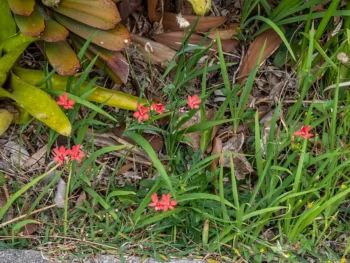
False Freesia: A Colorful Non-Native Bloomer for Warm Climate Gardens
If you’ve stumbled across the charming false freesia (Freesia laxa) in your gardening adventures, you might be wondering whether this pretty little bloomer deserves a spot in your landscape. With its delicate trumpet-shaped flowers and grass-like foliage, this South African native has found its way into Florida gardens, where it’s established itself as a naturalized resident.
What Exactly is False Freesia?
Despite its common name, false freesia isn’t a true freesia at all—though the resemblance is certainly there! This perennial forb grows from small corms (bulb-like structures) and produces slender, grass-like leaves topped with clusters of small, trumpet-shaped flowers. The blooms typically appear in shades of red, pink, or salmon, creating a cheerful splash of color in the garden.
Botanically speaking, Freesia laxa has gone through quite a few name changes over the years, with synonyms including Anomatheca laxa and various Lapeirousia species. But don’t let the scientific shuffling fool you—this is a pretty straightforward little plant once you get to know it.
Where Does False Freesia Grow?
Originally hailing from South Africa, false freesia has made itself at home in Florida, where it reproduces naturally without human intervention. This adaptable plant has found the warm, subtropical conditions of the Sunshine State much to its liking.
- Species observed
- No observations
Growing False Freesia: What You Need to Know
If you live in USDA hardiness zones 9-11 and are considering adding false freesia to your garden, here’s what you should know about its growing requirements:
- Sunlight: Thrives in full sun to partial shade
- Soil: Prefers well-draining soil; doesn’t tolerate waterlogged conditions
- Water: Drought tolerant once established, though benefits from occasional watering during dry spells
- Planting: Plant corms in fall for spring blooms
Garden Design and Landscape Use
False freesia works beautifully in several garden settings. Its compact size and naturalistic growth habit make it perfect for:
- Rock gardens and crevice plantings
- Mediterranean-style landscapes
- Naturalized meadow areas
- Container gardens and pots
- Ground cover in informal settings
The plant’s tendency to self-seed means it can create lovely drifts of color over time, though this same characteristic means you’ll want to keep an eye on its spread.
Care and Maintenance
One of false freesia’s most appealing qualities is its low-maintenance nature. Once established, it requires minimal care beyond occasional watering during extended dry periods. The plant may go dormant during cooler months, with foliage dying back before returning in spring.
Wildlife and Pollinator Value
The small, colorful blooms attract butterflies and other small pollinators, adding some wildlife value to your garden. However, as a non-native species, it doesn’t provide the same ecological benefits as plants that co-evolved with local wildlife.
Should You Plant False Freesia?
While false freesia isn’t invasive or problematic, it’s worth considering native alternatives that provide similar aesthetic appeal while supporting local ecosystems. Florida gardeners might explore native wildflowers like wild bergamot, blanket flower, or native penstemons for comparable color and pollinator appeal.
If you do choose to grow false freesia, enjoy its charming blooms and easy-care nature—just be mindful of its potential to self-seed and spread beyond where you initially planted it. Like many introduced plants, it’s found a comfortable niche in its adopted home, bringing a touch of South African charm to American gardens.