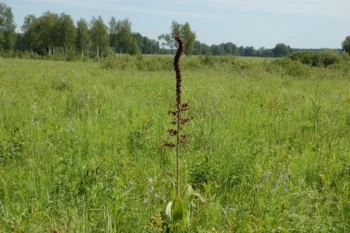
False Hellebore: A Dramatic but Dangerous Garden Statement
Meet false hellebore (Veratrum nigrum), a plant that’s equal parts stunning and scary. This towering perennial commands attention with its architectural presence, but it comes with a serious warning label that every gardener needs to know about before considering it for their landscape.
What Exactly Is False Hellebore?
False hellebore, also known as black-hellebore, is a robust perennial that hails from Europe and western Asia, stretching into Siberia. Despite its common name, it’s not actually related to true hellebores at all – it’s part of the lily family. This case of mistaken identity has been confusing gardeners for centuries!
The plant is a real showstopper, reaching heights of 3-6 feet with broad, deeply pleated leaves that look like they’ve been professionally pressed. In midsummer, it sends up dense spikes of small, dark purple to nearly black flowers that give the plant its species name nigrum.
The Good, The Bad, and The Toxic
The Good: False hellebore brings serious drama to shade gardens. Its architectural form creates a bold focal point, and the unusual dark flowers are conversation starters. It’s also quite hardy, thriving in USDA zones 3-8.
The Bad: This plant is slow – and we mean glacially slow – to establish. We’re talking years before it reaches its full potential. It’s also quite particular about its growing conditions.
The Toxic: Here’s where things get serious. Every single part of this plant is highly poisonous to humans, pets, and livestock. We’re not talking about a mild tummy ache – this plant contains alkaloids that can cause severe illness or death. It’s been used historically as a pesticide, which should tell you something about its potency.
Growing False Hellebore Successfully
If you’re still determined to grow false hellebore despite its toxic nature, here’s what you need to know:
- Location: Choose a spot in partial shade to full shade with rich, consistently moist soil
- Soil: Humus-rich, well-draining but moisture-retentive soil is ideal
- Watering: Keep soil consistently moist but not waterlogged
- Patience: Allow 3-5 years for the plant to reach maturity
- Division: If needed, divide in early spring when new growth appears
- Safety: Always wear gloves when handling and keep away from children and pets
Wildlife and Pollinator Considerations
False hellebore does attract some pollinators, particularly flies and beetles drawn to its unusual flowers. However, the plant’s toxicity means it’s generally avoided by most wildlife, which can be both a blessing and a limitation depending on your garden goals.
Native Alternatives to Consider
Before you commit to false hellebore, consider these native alternatives that offer similar architectural drama without the safety concerns:
- Wild ginger (Asarum canadense): Low-growing with heart-shaped leaves
- Mayapple (Podophyllum peltatum): Umbrella-like foliage with spring flowers
- Large-flowered trillium (Trillium grandiflorum): Spring ephemeral with dramatic three-petaled flowers
- Wild leek (Allium tricoccum): Broad leaves that emerge in spring
The Bottom Line
False hellebore is undeniably striking, but it’s not a plant to choose lightly. The combination of its extreme toxicity, slow growth, and non-native status makes it a challenging choice for most home gardeners. If you do decide to grow it, treat it with the respect (and caution) it demands, and always prioritize safety over aesthetics.
Consider whether one of the many beautiful native shade perennials might better serve your garden goals while supporting local ecosystems. Sometimes the most dramatic choice isn’t necessarily the best choice for your garden, your family, or your local environment.