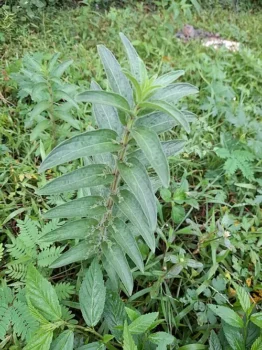
False Waterwillow: A Non-Native Annual for Moist Garden Spots
Meet false waterwillow (Andrographis echioides), a charming little annual that’s been quietly making itself at home in Virginia’s gardens and wild spaces. While it might not be a hometown hero, this non-native forb has some interesting qualities that make it worth knowing about – whether you’re considering adding it to your garden or simply curious about what’s growing in your neighborhood.
What Exactly is False Waterwillow?
Despite its common name suggesting a connection to willow trees, false waterwillow is actually a herbaceous annual forb – basically a soft-stemmed plant that completes its entire life cycle in one growing season. Originally hailing from tropical regions of Asia, this little wanderer has established itself as a naturalized resident in parts of the United States.
You might also see it listed under its scientific synonym, Justicia echioides, in older gardening references or plant databases.
Where Does False Waterwillow Call Home?
In the United States, false waterwillow has been documented growing wild in Virginia, where it reproduces on its own without any human help. As a non-native species that’s naturalized, it’s found its niche in the local ecosystem.
- Species observed
- No observations
Garden Appeal and Aesthetics
False waterwillow won’t win any showstopper of the year awards, but it has a subtle charm that works well in certain garden settings. The plant produces small, tubular flowers that range from white to pale purple, creating a delicate display against its simple green foliage. It’s the kind of plant that adds texture and fills in gaps rather than demanding center stage attention.
Where False Waterwillow Fits in Your Garden
This adaptable annual works best in:
- Cottage gardens where a natural, slightly wild look is desired
- Moist borders and edges of water features
- Naturalized areas that mimic wetland margins
- Informal plantings where self-seeding is welcome
Think of false waterwillow as a supporting player rather than a star – it’s excellent for filling in spaces and creating a naturalized feel.
Growing Conditions and Care
One of false waterwillow’s strongest suits is its easy-going nature. Here’s what it needs to thrive:
- Moisture: Prefers consistently moist to wet soils
- Light: Adaptable to partial shade through full sun
- Soil: Tolerates various soil types as long as moisture needs are met
- Climate: Hardy in USDA zones 8-11, though as an annual it may self-seed in warmer areas
The beauty of this plant lies in its low-maintenance personality. Once established, it pretty much takes care of itself, and in favorable conditions, it may readily self-seed for next year’s display.
Benefits for Pollinators
False waterwillow’s small tubular flowers are perfectly sized for attracting smaller pollinators, including native bees and butterflies. While it may not be a native plant, it can still provide nectar resources for local pollinating insects.
Should You Plant False Waterwillow?
Here’s the balanced truth: false waterwillow isn’t harmful, but it’s also not contributing to local biodiversity the way a native plant would. If you’re drawn to its qualities, it can certainly have a place in your garden, especially in naturalized or informal areas.
However, if you’re looking to support local ecosystems with native alternatives, consider these Virginia natives that offer similar benefits:
- Blue flag iris (Iris virginica) for wet areas
- Monkey flower (Mimulus ringens) for moist soils
- Cardinal flower (Lobelia cardinalis) for dramatic color in wet spots
The Bottom Line
False waterwillow is one of those plants that falls into the perfectly fine category – it’s not invasive, it’s not harmful, but it’s also not adding significant ecological value. If you already have it growing in your garden or it appears naturally, there’s no need to remove it. If you’re planning new plantings, though, consider giving native alternatives a chance to shine first. After all, our local pollinators and wildlife will thank you for choosing plants they’ve evolved alongside for thousands of years.