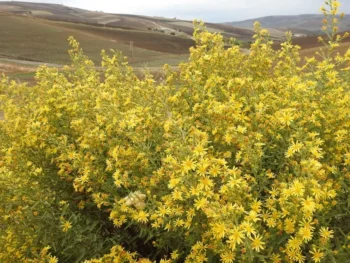
False Yellowhead: A Mediterranean Beauty That’s Made Itself at Home
Meet false yellowhead (Dittrichia viscosa), a perennial herb that’s traveled quite far from its Mediterranean roots to establish itself in parts of the United States. This yellow-flowered plant has quite the personality – it’s tough as nails, spreads with enthusiasm, and brings a splash of late-season color when many other plants are calling it quits for the year.
What Exactly Is False Yellowhead?
False yellowhead is a perennial forb, which is just a fancy way of saying it’s a non-woody plant that comes back year after year. You might also see it listed under its former scientific names, Cupularia viscosa or Inula viscosa, if you’re digging through older gardening references. This hardy little plant belongs to the sunflower family and shows its family resemblance with cheerful yellow, daisy-like blooms.
Where You’ll Find It Growing
Originally from the Mediterranean region, false yellowhead has made itself comfortable in Florida, New Jersey, and Pennsylvania. As a non-native species, it’s proven quite adaptable to American growing conditions and reproduces readily in the wild without any help from gardeners.
- Species observed
- No observations
The Good, The Bad, and The Spreading
Here’s where things get interesting with false yellowhead. On the plus side, this plant is practically indestructible – it laughs in the face of drought, poor soil, and neglect. Its late-summer yellow flowers provide nectar for bees and butterflies when many native plants have finished blooming. The aromatic foliage adds another sensory dimension to the garden experience.
However, false yellowhead has one major personality trait that can be either a blessing or a curse, depending on your perspective: it spreads. A lot. Through both underground rhizomes and seeds, this plant can quickly colonize an area, which might be exactly what you want for naturalizing a difficult spot, or exactly what you don’t want if you prefer a more controlled garden aesthetic.
Growing Conditions and Care
If you decide to give false yellowhead a try, you’ll find it’s about as low-maintenance as plants get. Here’s what it prefers:
- Full sun exposure
- Well-draining soil (though it’s not picky about soil quality)
- USDA hardiness zones 8-11, with possible survival in protected zone 7 areas
- Minimal water once established – this plant thrives on neglect
The main care you’ll need to provide is management to prevent unwanted spreading. Consider planting it in contained areas or be prepared to remove unwanted shoots regularly.
Is False Yellowhead Right for Your Garden?
False yellowhead might be a good choice if you’re looking to naturalize a difficult area, need something virtually bulletproof for harsh conditions, or want late-season pollinator support. However, its aggressive spreading habit means it’s not ideal for formal garden beds or small spaces where you want precise control.
Since false yellowhead is non-native, you might also consider these native alternatives that offer similar benefits without the spreading concerns:
- Goldenrod species (Solidago) for late-season yellow flowers
- Wild bergamot (Monarda fistulosa) for aromatic foliage and pollinator appeal
- Native asters for fall color and wildlife benefits
The Bottom Line
False yellowhead is a plant that knows what it wants and isn’t shy about taking it. If you’re looking for a tough, drought-tolerant perennial that provides late-season interest and don’t mind a plant with expansionist tendencies, it might work for your landscape. Just go in with your eyes wide open about its spreading nature, and consider whether native alternatives might better serve both your garden goals and local ecosystems.