Father-and-Child Plant: The Unassuming Visitor in Your Garden
If you’ve spotted a small, fuzzy-looking plant with woolly white leaves popping up in your garden or along roadsides, you might have encountered the father-and-child plant (Euchiton japonicus). This modest little annual has quietly made itself at home in parts of the United States, though it’s probably not what most gardeners would call a showstopper.
What Exactly Is the Father-and-Child Plant?
The father-and-child plant is a small annual forb – basically a non-woody herbaceous plant that completes its entire life cycle in one growing season. Originally from East Asia, particularly Japan, this plant belongs to the sunflower family and goes by the scientific name Euchiton japonicus (formerly known as Gnaphalium japonicum).
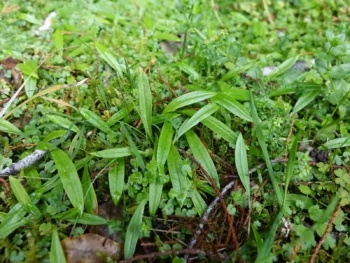
What makes this plant distinctive is its woolly, greyish-white appearance. The entire plant is covered in dense, soft hairs that give it an almost felt-like texture. It’s a compact little thing, typically staying low to the ground and producing tiny yellowish flower heads clustered at the tips of its stems.
Where You’ll Find It
Currently, the father-and-child plant has established populations in California, Hawaii, and Oregon. As a non-native species, it has successfully naturalized in these areas, reproducing on its own without human assistance.
- Species observed
- No observations
Should You Grow Father-and-Child Plant?
Here’s the thing about Euchiton japonicus – it’s not really a plant that most gardeners actively choose to grow. While it’s not considered invasive or harmful, it doesn’t offer much in terms of ornamental value either. Think of it more as a botanical curiosity than a garden superstar.
The plant tends to show up on its own in disturbed soils, along roadsides, and in other open areas. Its flowers are quite small and not particularly showy, and while they might attract some tiny insects, they’re not significant pollinator magnets like many of our native wildflowers.
Growing Conditions
If the father-and-child plant does appear in your garden, you’ll likely find it in:
- Well-draining soils
- Open, sunny locations
- Areas with some soil disturbance
- USDA hardiness zones 8-11 (based on current distribution)
It’s quite adaptable and doesn’t seem to be picky about soil types, which explains how it’s managed to establish itself in diverse locations from California’s varied climates to Hawaii’s tropical conditions.
Native Alternatives Worth Considering
Instead of encouraging the father-and-child plant, consider these native alternatives that offer similar low-growing, fuzzy textures but with much greater ecological value:
- Beach sagewort (Artemisia stelleriana) – Offers silvery, woolly foliage in coastal areas
- Woolly sunflower (Eriophyllum lanatum) – Provides fuzzy leaves with bright yellow flowers
- Dusty miller (Artemisia ludoviciana) – Native silvery-leafed plant perfect for dry gardens
The Bottom Line
The father-and-child plant is one of those quiet immigrants that has found a niche without causing much fuss. While it’s not harmful, it’s also not particularly beneficial to local wildlife or especially attractive to most gardeners. If it shows up in your garden naturally, there’s no urgent need to remove it, but you probably won’t want to go out of your way to plant it either.
For gardeners interested in low-maintenance, textured foliage plants, the native alternatives mentioned above will give you similar aesthetics while supporting local ecosystems – a true win-win for both your garden and local wildlife.