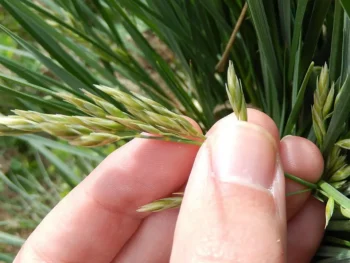
Festuca caerulescens: The Mystery Grass That’s Hard to Pin Down
If you’ve stumbled across the name Festuca caerulescens while researching native plants for your garden, you might be scratching your head—and you’re not alone! This particular grass species is something of an enigma in the botanical world, with limited reliable information available about its characteristics, distribution, or even its current taxonomic status.
What We Know (And Don’t Know)
Festuca caerulescens belongs to the fescue family, a group of grasses known for their adaptability and ecological value. Like other fescues, this would be a graminoid—essentially a grass or grass-like plant that includes true grasses, sedges, and rushes. However, beyond this basic classification, concrete details about this specific species are surprisingly scarce in botanical literature and plant databases.
The lack of readily available information could mean several things: this might be an outdated or synonym name for another fescue species, a very rare regional variety, or perhaps a species that’s been reclassified under a different name as botanical understanding has evolved.
The Challenge for Gardeners
For gardeners interested in adding native grasses to their landscapes, the uncertainty surrounding Festuca caerulescens presents a real challenge. Without clear information about:
- Its native range and growing conditions
- Mature size and growth habits
- Hardiness zones and climate preferences
- Wildlife and pollinator benefits
- Availability from nurseries or seed suppliers
It’s difficult to make an informed decision about whether this grass would be right for your garden.
Better Alternatives: Well-Documented Native Fescues
Rather than getting lost in the mystery of Festuca caerulescens, consider these well-documented native fescue alternatives that offer proven benefits for wildlife and landscapes:
- Hard Fescue (Festuca brevipila) – Drought-tolerant with fine texture
- Red Fescue (Festuca rubra) – Great for naturalized areas and slopes
- Idaho Fescue (Festuca idahoensis) – Excellent for western native plant gardens
- Sheep Fescue (Festuca ovina) – Low-growing and hardy
What This Teaches Us About Plant Research
The mystery surrounding Festuca caerulescens is actually a great reminder of how plant taxonomy continues to evolve. Species get reclassified, names change, and sometimes plants that were once considered distinct species are found to be variations of others. This is why it’s always wise to:
- Cross-reference plant names across multiple reliable sources
- Consult with local native plant societies or extension offices
- Work with reputable native plant nurseries
- Consider well-documented alternatives when information is scarce
The Bottom Line
While the botanical world loves a good mystery, your garden doesn’t have to be one! If you’re drawn to the idea of adding native fescues to your landscape, focus on the species with clear documentation, known benefits, and reliable sources. Your local wildlife—and your future gardening success—will thank you for choosing plants with proven track records over botanical question marks.
Sometimes the most responsible thing a gardener can do is admit when we don’t know enough about a plant to recommend it. In the case of Festuca caerulescens, that honesty might just lead you to discover an even better grass for your specific needs and growing conditions.