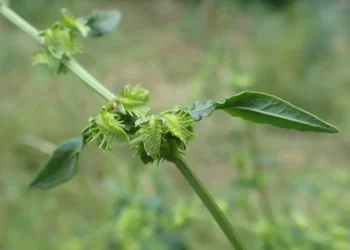
Fiddle Dock: A Non-Native Perennial with Distinctive Charm
If you’ve ever wondered about that peculiar plant with violin-shaped leaves growing in disturbed areas, you’ve likely encountered fiddle dock (Rumex pulcher). This European native has made itself quite at home across much of the United States, earning recognition for its unique foliage and adaptable nature.
What Is Fiddle Dock?
Fiddle dock is a perennial forb—essentially a non-woody herbaceous plant that comes back year after year. As its common name suggests, the leaves are distinctively fiddle or violin-shaped, creating an unmistakable silhouette in the landscape. This member of the buckwheat family produces tall spikes of small, greenish-red flowers that mature into rusty-brown seed heads.
You might also see this plant listed under the synonym Rumex pulcher L. ssp. divaricatus, but don’t let the scientific names confuse you—it’s the same distinctive plant with those characteristic paddle-shaped leaves.
Where Does Fiddle Dock Grow?
Originally native to Europe and western Asia, fiddle dock has established populations across a remarkable range of U.S. states. You can find it thriving from Alabama to Oregon, including Alabama, Arkansas, California, Delaware, Florida, Georgia, Kentucky, Louisiana, Maryland, Massachusetts, Mississippi, Missouri, New Jersey, New Mexico, North Carolina, Oklahoma, Oregon, Pennsylvania, South Carolina, Tennessee, Texas, Virginia, and West Virginia.
- Species observed
- No observations
This wide distribution speaks to the plant’s impressive adaptability to different climates and growing conditions.
Garden Appeal and Landscape Role
Fiddle dock brings several interesting qualities to the garden:
- Distinctive fiddle-shaped leaves that add textural interest
- Tall flower spikes that create vertical elements in the landscape
- Rusty-brown seed heads that provide late-season interest
- Low-maintenance growth habit once established
In garden design, fiddle dock works best in naturalized areas, wild gardens, or meadow-style plantings where its somewhat informal appearance fits the aesthetic. The plant can serve as an accent species, drawing the eye with its unique foliage.
Growing Conditions and Care
One of fiddle dock’s strengths is its adaptability to various growing conditions:
- Sunlight: Thrives in full sun to partial shade
- Soil: Tolerates various soil types and moisture levels
- Water: Prefers moist conditions but handles moderately dry sites
- Hardiness: Generally hardy in USDA zones 4-9
The plant’s wetland status varies by region—it can grow in both wetland and upland conditions depending on your location, making it quite versatile for different garden situations.
Wildlife and Pollinator Benefits
Fiddle dock’s small flowers attract various pollinators and beneficial insects, providing nectar during its blooming period. The seeds may also provide food for certain bird species, adding to its wildlife value.
Should You Plant Fiddle Dock?
Here’s where gardeners need to think carefully. While fiddle dock isn’t classified as invasive or noxious, it is a non-native species that reproduces readily on its own. This means it can potentially spread beyond where you originally plant it.
If you’re drawn to fiddle dock’s unique appearance, consider these factors:
- It may self-seed and establish in areas where you didn’t plant it
- As a non-native, it doesn’t support native ecosystems as effectively as indigenous plants
- It’s quite low-maintenance, which can be either a pro or con depending on your perspective
Native Alternatives to Consider
If you love the idea of distinctive foliage and vertical flower spikes, consider these native alternatives that provide similar garden appeal while supporting local ecosystems:
- Native dock species like curly dock (where native to your region)
- Wild bergamot for tall flower spikes
- Native sedges for interesting foliage texture
- Regional native wildflowers that provide similar structural elements
The Bottom Line
Fiddle dock is an adaptable, low-maintenance plant with distinctive aesthetic appeal. While it’s not aggressive enough to be considered invasive, its non-native status means thoughtful gardeners might prefer to choose native alternatives that provide similar benefits while supporting local wildlife and ecosystems. If you do decide to grow fiddle dock, be prepared for its potential to self-seed and manage it accordingly.
Whatever you choose, remember that every plant decision is an opportunity to create beautiful spaces that work in harmony with your local environment.