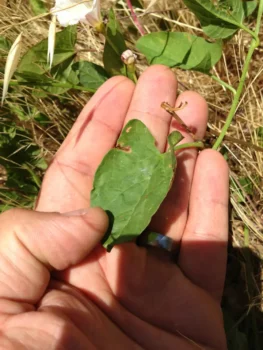
Field Bindweed: The Beautiful Menace You Should Never Plant
Field bindweed might look innocent enough with its delicate white or pink trumpet-shaped flowers, but don’t let its beauty fool you. This perennial vine is one of the most persistent and problematic weeds in North America, and it’s definitely not something you want to invite into your garden.
What Is Field Bindweed?
Field bindweed (Convolvulus arvensis) is a non-native perennial herb that belongs to the morning glory family. Originally from Europe, Asia, and North Africa, this climbing vine has established itself across virtually all of North America, from coast to coast and border to border.
The plant produces attractive funnel-shaped flowers that are typically white or pale pink, measuring about an inch across. Its leaves are arrow-shaped and alternate along twining stems that can grow several feet long. While it might remind you of its cousin, the morning glory, field bindweed is much more aggressive and difficult to control.
Where Does Field Bindweed Grow?
Field bindweed has spread throughout Canada and the United States, growing in every province and state except for the most extreme northern regions. You’ll find it from Alberta to Nova Scotia in Canada, and from Washington to Florida in the U.S., including Hawaii.
- Species observed
- No observations
Why You Should Never Plant Field Bindweed
Here’s the thing about field bindweed: it’s listed as a noxious weed in Alaska and several other jurisdictions for very good reasons. This plant is incredibly invasive and nearly impossible to eradicate once established. Here’s why it’s such a problem:
- It spreads through an extensive underground root system that can extend 20 feet horizontally and 30 feet deep
- Small root fragments can regenerate into new plants
- It produces abundant seeds that remain viable in soil for decades
- It outcompetes native plants and crops, reducing biodiversity
- It’s extremely difficult to control or remove completely
Growing Conditions (That Make It So Problematic)
Part of what makes field bindweed such a successful invader is its incredible adaptability. It thrives in USDA hardiness zones 3-10 and tolerates:
- Various soil types from sandy to clay
- Drought conditions once established
- Full sun to partial shade
- Disturbed soils and agricultural areas
Wildlife and Pollinator Considerations
While field bindweed flowers do attract some pollinators like bees, the environmental damage it causes far outweighs any minor benefits. The plant disrupts native ecosystems and displaces native plants that provide more valuable habitat and food sources for local wildlife.
Better Native Alternatives
Instead of field bindweed, consider these beautiful native climbing plants that provide similar aesthetic appeal without the environmental problems:
- American groundnut (Apios americana) – attractive purple flowers and edible tubers
- Wild morning glory (Ipomoea pandurata) – large white flowers with purple centers
- Virgin’s bower (Clematis virginiana) – fragrant white flowers and feathery seed heads
- Trumpet honeysuckle (Lonicera sempervirens) – tubular red flowers loved by hummingbirds
If You Already Have Field Bindweed
If field bindweed has already invaded your property, don’t despair, but be prepared for a long battle. Management typically requires a combination of repeated cultivation, careful herbicide application, and establishment of competitive plants. Contact your local extension office for specific management recommendations for your area.
Remember, the best approach with field bindweed is prevention. Never intentionally plant it, and be vigilant about removing any seedlings that appear in your garden before they can establish their extensive root systems.