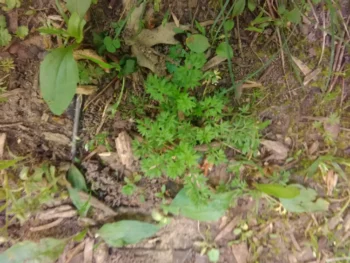
Field Burrweed: The Tiny Ground-Hugger You Might Not Want in Your Garden
If you’ve ever noticed tiny, feathery-leaved plants carpeting disturbed areas of your yard, you might have encountered field burrweed (Soliva sessilis). This diminutive annual has a knack for showing up uninvited, and while it might seem harmless enough, there are some important things to know before deciding whether it belongs in your landscape.
What Exactly Is Field Burrweed?
Field burrweed is a small annual forb – essentially an herbaceous plant without any woody stems above ground. Don’t let its delicate appearance fool you; this little plant is surprisingly tenacious. It’s also known by the botanical synonyms Soliva daucifolia and Soliva pterosperma, though most gardeners simply call it field burrweed.
Originally hailing from South America, this non-native species has made itself quite at home across much of North America. It reproduces spontaneously in the wild and tends to persist once established, which explains why you might find it popping up year after year.
Where You’ll Find Field Burrweed
Field burrweed has spread across a impressive range of states and provinces, including Alabama, Arizona, Arkansas, British Columbia, California, Florida, Georgia, Hawaii, Louisiana, Mississippi, North Carolina, Oklahoma, Oregon, South Carolina, Tennessee, Texas, Virginia, and Washington. That’s quite the travel resume for such a small plant!
- Species observed
- No observations
The Garden Reality Check
Let’s be honest – field burrweed isn’t going to win any beauty contests. This low-growing plant produces tiny, buttonlike flower heads that are more functional than ornamental. The finely divided, almost feathery leaves can create a soft-textured ground cover, but the overall effect is more weedy patch than garden feature.
The plant typically grows as a small, spreading mat, rarely reaching more than a few inches in height but capable of covering considerable ground area. Its growth rate is moderate to fast, especially in disturbed soils where it faces little competition.
Growing Conditions and Hardiness
Field burrweed is remarkably adaptable when it comes to growing conditions. It thrives in:
- Full sun to partial shade
- Poor, disturbed soils
- Areas with minimal competition from other plants
- USDA hardiness zones 8-11 (though as an annual, it may appear in cooler zones during growing season)
Regarding water needs, field burrweed shows different preferences depending on region. In most areas, it’s classified as facultative upland, meaning it usually occurs in non-wetlands but can tolerate some wetland conditions. However, in the Great Plains and Hawaii, it’s considered obligate upland and almost never occurs in wetlands.
The Pollinator and Wildlife Picture
Unfortunately, field burrweed offers minimal benefits to pollinators. Its tiny flowers are primarily wind-pollinated, so they don’t provide the nectar or pollen resources that bees, butterflies, and other beneficial insects seek. The wildlife benefits are also quite limited compared to native alternatives.
Should You Plant Field Burrweed?
Here’s where we need to have a frank conversation. While field burrweed isn’t necessarily harmful, it’s not particularly beneficial either. As a non-native species with limited ecological value, it’s essentially taking up space that could be occupied by plants that better support local ecosystems.
If you’re looking for low-growing ground covers or plants for disturbed areas, consider these native alternatives instead:
- Native sedges for moist areas
- Regional native wildflowers for disturbed sites
- Indigenous ground-covering perennials suited to your specific region
If Field Burrweed Finds You
Since field burrweed often appears on its own, you might not need planting tips so much as management advice. If you’re okay with its presence, simply let it be – it requires virtually no care and will complete its annual cycle naturally. If you’d prefer to remove it, hand-pulling is effective, especially when the soil is moist.
The key is to decide whether this small, unassuming plant aligns with your garden goals. While it won’t cause major problems, it also won’t contribute significantly to supporting native wildlife or creating a particularly attractive landscape feature.
The Bottom Line
Field burrweed is one of those plants that exists in the gray area between weed and wildflower. It’s not aggressive enough to be truly problematic, but it’s not beneficial enough to actively recommend. If you’re passionate about supporting native ecosystems and pollinators, your garden space is better devoted to indigenous species that have co-evolved with local wildlife.
That said, if field burrweed has already made itself at home in less formal areas of your property, there’s no urgent need to wage war against it. Just consider it a reminder to research native alternatives for your next planting project!