Field Cottonrose: What You Need to Know About This European Introduction
If you’ve stumbled across the name field cottonrose while researching plants for your garden, you might be wondering if this is a charming addition worth considering. Let me save you some time: Logfia arvensis, commonly known as field cottonrose, isn’t the cottony, rose-like plant its name might suggest. This small, rather unremarkable annual is actually a non-native species that’s more likely to show up uninvited in your garden than to grace it with ornamental beauty.
What Exactly Is Field Cottonrose?
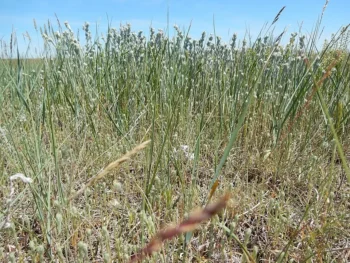
Field cottonrose is an annual forb—basically a non-woody plant that completes its entire life cycle in one growing season. Don’t let the romantic common name fool you; this plant bears no resemblance to roses and only gets its cotton reference from its somewhat woolly, grayish appearance. Originally from Europe and western Asia, this little wanderer has made itself at home across parts of North America, though it’s not exactly winning any popularity contests among gardeners.
You might also encounter this plant under its scientific synonyms, including Filago arvensis or Gnaphalium arvense, if you’re digging deep into botanical references.
Where Does It Grow?
Field cottonrose has established itself across a surprisingly wide range of North American locations. You’ll find it scattered throughout several Canadian provinces including British Columbia, Ontario, and Saskatchewan, as well as various U.S. states from Idaho and Montana down to Texas, and from Michigan over to Washington and Oregon.
- Species observed
- No observations
This distribution tells us something important: this plant is quite adaptable and doesn’t need our help to spread around.
Should You Plant Field Cottonrose?
Here’s where I’m going to be straight with you—there’s really no compelling reason to intentionally plant field cottonrose in your garden. While it’s not officially listed as invasive or noxious in most areas, it brings very little to the table in terms of garden value:
- Minimal aesthetic appeal with tiny, inconspicuous flower clusters
- No significant benefits for pollinators (it’s primarily wind-pollinated)
- Tends to behave like a weed in disturbed soils
- Offers little to no wildlife value
Better Native Alternatives
Instead of field cottonrose, consider these native alternatives that will give you much more bang for your gardening buck:
- Native Gnaphalium species (cudweeds) that provide similar texture but support local ecosystems
- Antennaria species (pussytoes) for low-growing, woolly-textured plants
- Regional native wildflowers that support local pollinators and wildlife
If It Shows Up Anyway
Since field cottonrose reproduces readily on its own and thrives in disturbed soils, you might find it appearing in your garden without an invitation. It tends to favor sandy or gravelly soils and can handle drought conditions quite well. If you’re not bothered by its presence and it’s not crowding out plants you actually want, it’s generally harmless to leave it be.
However, if you prefer a more curated garden space, it’s easy enough to pull up these small annuals, especially when the soil is moist.
The Bottom Line
Field cottonrose is one of those plants that’s more interesting as a botanical footnote than as a garden addition. While it’s not going to cause ecological disaster in your landscape, it’s also not going to contribute much beauty, pollinator support, or wildlife value. Your gardening energy is better spent on native plants that will create a more vibrant, ecologically supportive outdoor space.
Sometimes the best gardening advice is knowing what not to plant—and field cottonrose falls squarely into that category for most gardening goals.