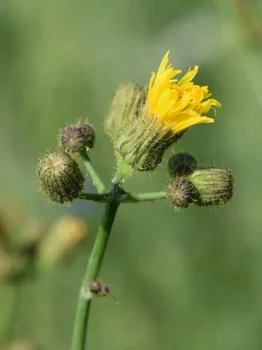
Field Sowthistle: Why This Yellow-Flowered Weed Should Stay Out of Your Garden
If you’ve spotted tall plants with bright yellow, dandelion-like flowers popping up in fields, roadsides, or even creeping into garden spaces, you’ve likely encountered field sowthistle (Sonchus arvensis). While these perennial forbs might catch your eye with their cheerful blooms, there’s a lot more to this plant than meets the eye – and most of it spells trouble for North American gardeners and ecosystems.
What Exactly is Field Sowthistle?
Field sowthistle is a non-native perennial forb that originally hails from Europe and Asia. As a forb, it’s essentially an herbaceous plant without woody stems – think of it as a really persistent, really tall weed that comes back year after year. This plant has made itself quite at home across North America, establishing populations from Alaska all the way down to the southern United States.
The plant can reach impressive heights of 2-5 feet, spreading aggressively through underground rhizomes (root-like stems). Its yellow flowers might look pretty, but don’t let that fool you into thinking it’s garden-worthy.
Where You’ll Find Field Sowthistle
Field sowthistle has an incredibly wide distribution across North America. You can find it established in all Canadian provinces and territories, including Alberta, British Columbia, Manitoba, New Brunswick, Nova Scotia, Ontario, Prince Edward Island, Quebec, Saskatchewan, Yukon, Northwest Territories, and Newfoundland. In the United States, it’s present in most states from coast to coast, including Alaska.
- Species observed
- No observations
The Red Flags: Why You Shouldn’t Plant Field Sowthistle
Here’s where things get serious. Field sowthistle isn’t just a harmless non-native plant – it’s actually classified as a prohibited noxious weed in Alaska. This designation means it’s recognized as particularly harmful to agriculture, natural ecosystems, or human activities.
The plant’s aggressive spreading habit through underground rhizomes means it can quickly take over garden beds, crowd out native plants, and become a persistent headache for gardeners. Once established, it’s notoriously difficult to remove completely.
Growing Conditions (Or Rather, Where It Thrives Whether You Want It To or Not)
Field sowthistle is remarkably adaptable, which is part of what makes it so problematic. It thrives in USDA hardiness zones 3-9 and shows different preferences for moisture depending on the region:
- In most regions, it prefers upland (non-wetland) conditions but can tolerate some moisture
- In the Great Plains, it’s equally comfortable in wet or dry conditions
- In Atlantic and Gulf Coastal Plains, it sticks to dry, upland areas
The plant grows well in full sun to partial shade and isn’t particularly picky about soil types, making it a formidable colonizer of various habitats.
The One Bright Spot: Pollinator Appeal
If there’s one redeeming quality to field sowthistle, it’s that the bright yellow flowers do attract bees and other pollinators. However, this small benefit is far outweighed by the plant’s invasive behavior and negative impacts on native ecosystems.
Better Alternatives for Your Garden
Instead of risking the introduction of field sowthistle to your landscape, consider these native alternatives that offer similar benefits without the ecological concerns:
- Wild bergamot (Monarda fistulosa) – Native perennial with showy flowers that attract pollinators
- Black-eyed Susan (Rudbeckia species) – Bright yellow native flowers that bloom for months
- Goldenrod (Solidago species) – Native fall-blooming plants that provide crucial late-season nectar
- Native asters (Symphyotrichum species) – Beautiful fall bloomers that support native wildlife
If You Already Have Field Sowthistle
If field sowthistle has already established itself on your property, removal can be challenging but not impossible. The key is persistence and targeting the root system:
- Hand-pull young plants when soil is moist, making sure to get as much of the root system as possible
- For established plants, repeated cutting before seed formation can weaken the root system over time
- Consider consulting with local extension services or land management professionals for large infestations
- Never compost field sowthistle plants, as they may continue to spread
The Bottom Line
While field sowthistle might have attractive yellow flowers and provide some pollinator resources, its invasive nature and noxious weed status make it a poor choice for intentional cultivation. Instead, focus on native alternatives that provide similar benefits while supporting local ecosystems. Your garden – and your local environment – will thank you for making the responsible choice.
Remember, the best gardens work with nature, not against it. By choosing native plants over invasive species like field sowthistle, you’re creating a landscape that truly supports the web of life in your area.