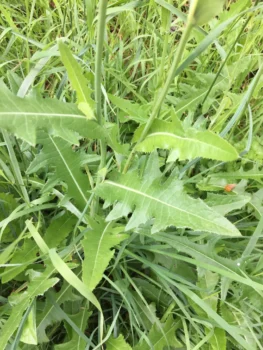
Field Sowthistle: What Every Gardener Should Know About This Non-Native Perennial
If you’ve spotted tall, yellow-flowered plants popping up in fields, roadsides, or even your garden, you might be looking at field sowthistle (Sonchus arvensis arvensis). This non-native perennial has made itself quite at home across North America, and while it’s not necessarily a villain in the garden world, it’s worth understanding what you’re dealing with.
Getting to Know Field Sowthistle
Field sowthistle is a perennial forb – basically a non-woody flowering plant that comes back year after year. Originally from Europe and Asia, this adaptable plant has spread across an impressive range of North American territories and states, from Alberta to Wyoming, and from Newfoundland to California.
The plant is also known by the scientific synonym Sonchus arvensis L. var. shumovichii B. Boivin, though most gardeners will simply encounter it as field sowthistle.
Where You’ll Find It
This widespread plant has established itself across most of Canada and the United States, thriving in diverse climates and conditions. You’ll find field sowthistle growing in states and provinces including Alberta, British Columbia, Manitoba, New Brunswick, California, Nova Scotia, Ontario, Colorado, and dozens more across the continent.
- Species observed
- No observations
What Does Field Sowthistle Look Like?
Field sowthistle produces bright yellow, dandelion-like flowers that bloom in clusters. As a forb, it lacks significant woody tissue and maintains its structure through herbaceous growth. The plant can be quite tall and tends to form patches where it establishes itself.
Should You Plant Field Sowthistle?
Here’s where things get interesting. While field sowthistle isn’t necessarily harmful, it’s not native to North America. As gardeners increasingly focus on supporting local ecosystems, there are compelling reasons to consider native alternatives instead.
Better Native Alternatives
If you’re drawn to field sowthistle’s sunny yellow blooms, consider these native options that will better support local wildlife:
- Wild bergamot (Monarda fistulosa) for similar height and pollinator appeal
- Cup plant (Silphium perfoliatum) for tall, yellow flowers
- Goldenrod species (Solidago spp.) for late-season yellow blooms
- Black-eyed susan (Rudbeckia species) for cheerful yellow flowers
If You Encounter Field Sowthistle
Field sowthistle often appears on its own in gardens, fields, and disturbed areas. If you find it growing in your space, you can:
- Remove it if you prefer native plants
- Leave it if it’s not causing problems, though it may self-seed
- Use it as a temporary filler while establishing native alternatives
The Bottom Line
Field sowthistle is one of those plants that’s neither hero nor villain – it’s simply here. While it can survive in various conditions and may offer some benefits to pollinators, choosing native plants will always be the better choice for supporting local ecosystems and wildlife.
If you’re planning a new garden or looking to replace existing plants, focus on native species that have evolved alongside local wildlife. Your local native plant society or extension office can help you identify the best native alternatives for your specific region and growing conditions.