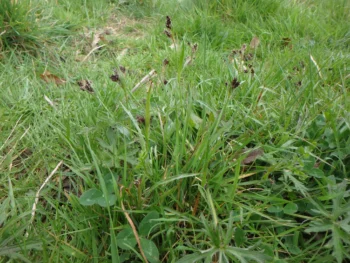
Field Woodrush: A Quiet European Newcomer for Naturalized Gardens
Meet field woodrush (Luzula campestris), a modest little grass-like perennial that’s made itself quite at home across parts of North America despite its European origins. While it won’t win any beauty contests, this unassuming plant has carved out its own niche in the gardening world for those seeking low-maintenance ground cover options.
What Exactly Is Field Woodrush?
Field woodrush is a perennial member of the rush family (Juncaceae) that forms small tufts of narrow, grass-like foliage. Don’t let the name fool you – it’s not actually a grass, though it certainly looks like one! This hardy little plant produces inconspicuous brown flower clusters in spring that dance delicately above the foliage on slender stems.
You might also see it listed under its scientific synonyms, including Juncoides campestre, but Luzula campestris is the name that’s stuck in most gardening circles.
Where You’ll Find Field Woodrush
Originally from Europe and parts of Asia, field woodrush has established itself as a non-native species across several regions of North America. You can find it growing wild in British Columbia, New Brunswick, Ontario, Quebec, Connecticut, Massachusetts, New York, Washington, and Newfoundland. It reproduces on its own and tends to persist once established, though it’s not currently listed as invasive.
- Species observed
- No observations
The Good, The Bad, and The Neutral
So should you plant field woodrush in your garden? Well, that depends on what you’re looking for. Here’s the honest truth about this European transplant:
- The Good: It’s incredibly low-maintenance, adaptable to various growing conditions, and works well as ground cover in naturalized settings
- The Neutral: Its aesthetic appeal is subtle at best – think quietly functional rather than showstopper
- The Consideration: As a non-native species, it doesn’t provide the same ecological benefits as native alternatives
Growing Conditions and Care
If you decide field woodrush fits your gardening goals, you’ll be pleased to know it’s refreshingly undemanding. This adaptable plant handles a range of conditions with grace:
- Sunlight: Partial shade to full sun
- Soil: Various soil types, from moist to moderately dry
- Hardiness: USDA zones 4-8
- Wetland Status: Facultative (can grow in both wet and dry areas)
Planting and Maintenance Tips
Field woodrush is wonderfully straightforward to grow. Once established, it requires minimal fussing and will slowly spread through self-seeding and short underground stems called rhizomes. Plant it in spring or fall, give it some water during establishment, and then largely leave it alone to do its thing.
Keep in mind that this isn’t a plant for formal gardens or high-traffic areas. It’s best suited for naturalized spaces, woodland gardens, or areas where you want a low-maintenance, grass-like ground cover that won’t demand constant attention.
Wildlife and Pollinator Value
Here’s where field woodrush shows its limitations as a non-native species. Its small, wind-pollinated flowers offer minimal benefits to pollinators, and its wildlife value is quite limited compared to native alternatives. The plant essentially keeps to itself ecologically speaking.
Native Alternatives to Consider
If you’re drawn to the idea of a low-growing, grass-like ground cover but want to support local ecosystems, consider these native alternatives instead:
- Native sedges (Carex species) for similar texture with greater wildlife benefits
- Buffalo grass in appropriate regions for a native lawn alternative
- Native bunch grasses that provide food and habitat for local wildlife
The Bottom Line
Field woodrush occupies an interesting middle ground in the gardening world. It’s not invasive or problematic, but it’s also not contributing much to local ecosystems. If you need a tough, low-maintenance ground cover for a naturalized area and don’t mind its modest appearance, it might fit the bill. However, if supporting native wildlife and pollinators is a priority, you’ll find better options among our native grass-like plants.
Whatever you choose, remember that every plant decision is an opportunity to create the garden that works best for you and your local environment.