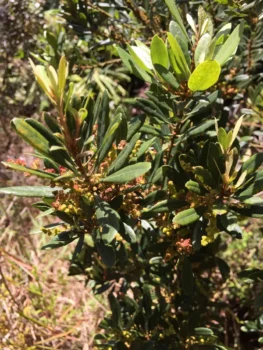
Firetree: Why This Invasive Plant Should Stay Out of Your Garden
If you’re gardening in Hawaii and come across a plant called firetree (Morella faya), here’s some important advice: don’t plant it! While this evergreen shrub might seem harmless enough, it’s actually one of Hawaii’s most problematic invasive species. Let’s dive into why firetree earned its bad reputation and what you should know about this troublesome plant.
What is Firetree?
Firetree, scientifically known as Morella faya (formerly called Myrica faya), is a perennial shrub that typically grows as a multi-stemmed woody plant reaching 13 to 16 feet in height. Originally from the Canary Islands, Madeira, and the Azores, this non-native species has established itself far too well in Hawaiian ecosystems.
The plant features waxy, leathery evergreen leaves and produces small reddish-brown berries. While it might look relatively unremarkable, don’t let its modest appearance fool you – this shrub packs a serious ecological punch.
Where You’ll Find Firetree
In the United States, firetree grows exclusively in Hawaii, where it has become naturalized and reproduces without any human help. Unfortunately, its ability to thrive and spread rapidly has made it a major concern for land managers and conservationists throughout the islands.
- Species observed
- No observations
Why Firetree is a Problem
Here’s the thing about firetree – it’s incredibly invasive. This shrub has earned its place on Hawaii’s most wanted list of problematic plants for several reasons:
- It spreads aggressively, crowding out native Hawaiian plants
- Birds eat the berries and spread seeds far and wide
- It can fix nitrogen in the soil, actually changing the chemistry of native ecosystems
- It establishes quickly in disturbed areas and volcanic soils
- Once established, it’s difficult to remove completely
Growing Conditions (That Make It So Successful)
Part of what makes firetree such a successful invader is its adaptability. This hardy shrub thrives in USDA zones 9-11 and tolerates a wide range of conditions:
- Grows in full sun to partial shade
- Tolerates poor, volcanic soils
- Handles drought conditions once established
- Adapts to various elevations and climates within Hawaii
Our Strong Recommendation: Don’t Plant It!
We cannot stress this enough – please do not plant firetree in your garden or landscape. Even if you think you can contain it, this species has proven time and again that it will find a way to escape cultivation and invade native habitats.
If you already have firetree on your property, consider working with local land management agencies to have it removed. Many areas have programs to help with invasive species control.
Better Alternatives for Your Hawaiian Garden
Instead of firetree, consider these beautiful native Hawaiian alternatives that will support local ecosystems:
- ʻAkoko (Euphorbia celastroides) – A hardy native shrub with interesting branching patterns
- Naupaka (Scaevola taccada) – Perfect for coastal gardens with unique half-flowers
- ʻIlima (Sida fallax) – Hawaii’s state flower with cheerful yellow blooms
- Pili grass (Heteropogon contortus) – A native grass that provides habitat for native insects
The Bottom Line
While firetree might survive and even thrive in Hawaiian conditions, that’s exactly the problem. This invasive species poses a real threat to Hawaii’s unique native ecosystems. As responsible gardeners, our job is to support biodiversity and protect native species – not to introduce or encourage plants that can cause ecological harm.
When in doubt, go native! Your local native plant society or extension office can help you choose beautiful, appropriate plants that will make your garden both stunning and environmentally responsible.