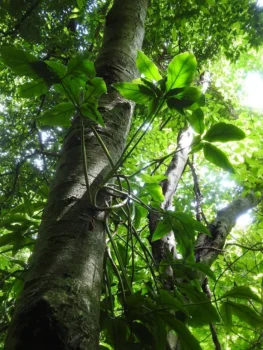
Fivefingers: A Climbing Beauty for Your Garden
Meet fivefingers (Syngonium angustatum), a charming climbing vine that’s been quietly making its way into gardens across warmer regions of the United States. With its distinctive arrow-shaped leaves and easy-going nature, this perennial climber offers an interesting option for gardeners looking to add vertical interest to their landscapes.
What Makes Fivefingers Special?
Fivefingers gets its common name from its uniquely shaped foliage. This twining and climbing plant produces attractive leaves that start arrow-shaped when young and can develop into more complex forms as the plant matures. The relatively long stems can become woody over time, creating a substantial presence in the garden.
As a non-native species, fivefingers has established itself in Florida, Guam, and Palau, where it reproduces naturally and persists in the wild. The plant has adapted well to these regions and can thrive in both wetland and non-wetland conditions, earning it a facultative wetland status in Hawaii.
- Species observed
- No observations
Garden Appeal and Design Potential
If you’re drawn to plants with architectural interest, fivefingers might catch your eye. This climbing vine works beautifully when given proper support, making it suitable for:
- Trellises and arbors
- Fence lines needing softening
- Container gardens with climbing supports
- Shaded garden areas needing vertical elements
The plant’s ability to climb and spread makes it versatile for various garden styles, from tropical-themed landscapes to more traditional shade gardens.
Growing Conditions and Care
Fivefingers is generally considered an easy-care plant that adapts to different growing conditions. It performs best in USDA hardiness zones 10-12, though gardeners in cooler climates can enjoy it as a houseplant or annual.
For optimal growth, provide:
- Partial shade to full shade conditions
- Moist, well-draining soil
- Adequate humidity
- Structural support for climbing
Regular watering during dry periods will keep your fivefingers happy, but avoid waterlogged conditions. The plant’s facultative wetland status means it can handle some moisture variation, making it relatively forgiving for newer gardeners.
Planting and Maintenance Tips
When establishing fivefingers in your garden:
- Choose a location with morning sun and afternoon shade
- Install climbing support before planting
- Water regularly during the establishment period
- Prune as needed to maintain desired shape and size
- Monitor growth to prevent unwanted spreading
Wildlife and Pollinator Considerations
While fivefingers may provide some habitat structure for small creatures, its wildlife benefits aren’t extensively documented. The plant’s flowers are typically inconspicuous and don’t serve as major pollinator magnets.
A Word About Native Alternatives
Since fivefingers is non-native, you might also consider exploring indigenous climbing vines that could provide similar aesthetic appeal while supporting local ecosystems. Native alternatives often offer better wildlife habitat and require less maintenance once established, as they’re naturally adapted to local growing conditions.
The Bottom Line
Fivefingers can be an attractive addition to warm-climate gardens, especially for gardeners seeking an easy-care climbing plant for shaded areas. Its unique foliage and adaptable nature make it a reasonable choice for certain garden situations. However, as with any non-native plant, consider your local ecosystem and explore native options that might serve similar functions while providing greater environmental benefits.
Whether you choose fivefingers or a native alternative, the key is selecting plants that match your garden conditions and maintenance preferences while contributing positively to your local landscape.