Fivehorn Smotherweed: What Gardeners Need to Know About This Non-Native Annual
If you’ve stumbled across the name fivehorn smotherweed in your gardening research, you might be wondering whether this plant deserves a spot in your landscape. The short answer? Probably not. Let’s dive into why this non-native annual has earned such an unflattering common name and what you should know about Bassia hyssopifolia.
Meet the Fivehorn Smotherweed
Fivehorn smotherweed (Bassia hyssopifolia) is an annual plant that originally hails from Eurasia but has made itself quite at home across North America. You might also encounter this plant under its scientific synonyms Echinopsilon hyssopifolius or Kochia hyssopifolia in older gardening references.
This plant has established itself as a non-native species that reproduces spontaneously in the wild across Canada, Hawaii, and the lower 48 states without any help from humans. Once it arrives, it tends to stick around – a classic characteristic of successful non-native plants.
Where You’ll Find It Growing
Fivehorn smotherweed has spread to an impressive number of locations across North America. You can find it growing in Alberta, British Columbia, Arizona, California, Colorado, Hawaii, Idaho, Iowa, Kentucky, Maine, Massachusetts, Montana, Nevada, New Jersey, New Mexico, New York, Oregon, South Dakota, Texas, Utah, Washington, and Wyoming.
- Species observed
- No observations
What Does It Look Like?
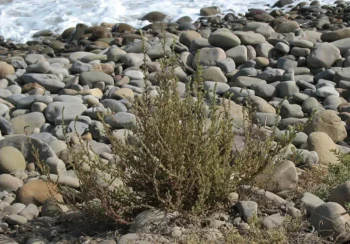
Don’t expect this plant to win any beauty contests. Fivehorn smotherweed grows as a single-stemmed annual that reaches about 0.8 feet tall. Here’s what to look for:
- Gray-green foliage with a coarse texture
- Small, inconspicuous green flowers that bloom in early summer
- Black seeds that are quite noticeable when they develop
- Erect growth habit with porous foliage
- Rapid growth rate during its active summer growing period
Growing Conditions and Habitat
This hardy little plant isn’t particularly picky about where it grows, which partly explains its widespread distribution. Fivehorn smotherweed thrives in:
- Medium to fine-textured soils
- Areas with low fertility requirements
- Locations with moderate moisture
- Full sun conditions (it’s shade intolerant)
- Soil pH ranging from 6.5 to 9.1
- Areas receiving 7-24 inches of annual precipitation
The plant shows impressive tolerance to high salinity and calcium carbonate levels, making it adaptable to challenging growing conditions that might discourage other plants.
Why Smotherweed?
The unflattering common name gives you a hint about this plant’s behavior in the landscape. While specific invasive status information isn’t available, the fact that it’s non-native and has successfully established across such a wide range suggests it can be quite competitive with native vegetation.
Should You Plant It?
Here’s where things get straightforward: you probably shouldn’t. While fivehorn smotherweed isn’t specifically listed as invasive or noxious, its non-native status and aggressive spreading ability make it a poor choice for responsible gardeners. The plant offers minimal ornamental value and limited benefits to local wildlife and pollinators.
Instead of planting fivehorn smotherweed, consider these native alternatives that provide similar growing characteristics but support local ecosystems:
- Native annual wildflowers suited to your specific region
- Indigenous grasses that thrive in similar conditions
- Local shrubs that can handle poor soils and drought conditions
If You Encounter It
If you find fivehorn smotherweed growing on your property, you can remove it fairly easily since it’s an annual with no vegetative spread. The plant produces abundant seeds (about 1,500 per pound), so it’s best to remove plants before they set seed to prevent future generations from establishing.
The Bottom Line
While fivehorn smotherweed might seem like a low-maintenance option for challenging growing conditions, its non-native status and limited ecological benefits make it a poor choice for gardeners who want to support local wildlife and maintain healthy ecosystems. Instead, invest your time and energy in native plants that will provide beauty, support pollinators, and contribute to your local environment’s health.
Remember, every plant we choose for our gardens is a vote for the kind of landscape we want to create. Choose native – your local wildlife will thank you!