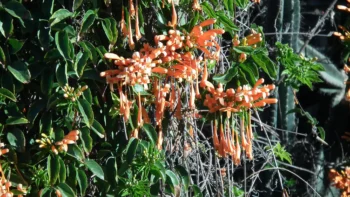
Flamevine: A Spectacular Non-Native Climber for Warm Gardens
If you’ve ever spotted a cascade of brilliant orange-red tubular flowers spilling over a fence or pergola in Florida, chances are you were admiring flamevine (Pyrostegia venusta). This eye-catching climbing vine brings tropical flair to warm-climate gardens, though it’s worth understanding both its benefits and its non-native status before adding it to your landscape.
What is Flamevine?
Flamevine is a perennial climbing vine originally native to Brazil and South America. This vigorous grower features long, twining stems that can be either woody or herbaceous, making it an excellent choice for covering structures like arbors, fences, and walls. You might also see it referred to by its botanical name, Pyrostegia venusta, or its synonyms Bignonia venusta and Pyrostegia ignea.
Where Does Flamevine Grow?
In the United States, flamevine has established itself in Florida and Puerto Rico, where it reproduces spontaneously in the wild. This non-native species thrives in these warm, humid climates and has adapted well to local conditions.
- Species observed
- No observations
Why Gardeners Love (and Sometimes Question) Flamevine
There’s no denying flamevine’s spectacular visual impact. From fall through winter, this vine produces masses of brilliant orange-red tubular flowers that create stunning displays when the plant is in full bloom. The timing couldn’t be better – these vibrant flowers appear when many other plants are dormant, bringing much-needed color to winter gardens.
Hummingbirds and butterflies are particularly drawn to flamevine’s nectar-rich flowers, making it a valuable addition for gardeners interested in supporting pollinators. However, since this is a non-native species, it’s worth considering native alternatives that provide similar benefits while supporting local ecosystems more effectively.
Growing Flamevine Successfully
If you decide to grow flamevine, here’s what you need to know:
Climate Requirements
- USDA hardiness zones 9-11
- Requires protection from frost in zone 9
- Thrives in tropical and subtropical climates
Growing Conditions
- Prefers full sun to partial shade
- Needs well-draining soil
- Requires moderate watering once established
- Benefits from regular feeding during growing season
Planting and Care Tips
- Provide a strong support structure – this vine can become quite heavy
- Plant in spring after the last frost
- Regular pruning helps maintain shape and prevents overwhelming growth
- In zone 9, consider container growing so you can move plants indoors during cold snaps
Garden Design Ideas
Flamevine works beautifully in tropical and Mediterranean-style gardens where its bold flowers complement other warm-climate plants. Use it to cover pergolas, create living screens, or add vertical interest to walls and fences. Just remember that this vigorous grower needs room to spread and strong support to handle its eventual size.
Consider Native Alternatives
While flamevine certainly has its merits, consider exploring native flowering vines that offer similar benefits while supporting local wildlife more effectively. Native alternatives might include trumpet vine (Campsis radicans) in appropriate regions, though be sure to research what’s native to your specific area.
Whether you choose flamevine or a native alternative, climbing flowering vines add vertical beauty and wildlife value to any warm-climate garden. Just remember to provide adequate support and be prepared for some regular pruning to keep these enthusiastic climbers in bounds!