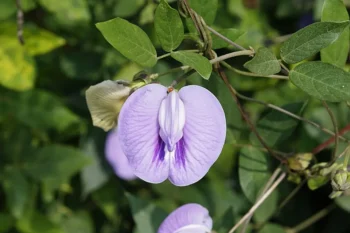
Flor de Conchitas: A Tropical Vine with Purple Blooms
Meet flor de conchitas (Centrosema pubescens), a perennial vine that’s been making itself at home in tropical regions like Hawaii and Puerto Rico. With its charming purple butterfly-shaped flowers and sprawling growth habit, this plant has caught the attention of gardeners looking for ground cover options in warm climates.
What is Flor de Conchitas?
Flor de conchitas is a herbaceous perennial vine that belongs to the legume family. Also known scientifically as Centrosema pubescens (and sometimes listed under the synonym Bradburya pubescens), this plant is what botanists call a forb—essentially a non-woody flowering plant that stays soft and green throughout its growing season.
The plant produces distinctive purple flowers that look like tiny butterflies dancing along the vine, which is probably how it earned its Spanish common name meaning little shell flower.
Where Does It Grow?
Originally from Central and South America, flor de conchitas has established populations in Hawaii and Puerto Rico, where it reproduces on its own without human assistance. It’s considered a non-native species in these locations, having been introduced from its tropical homeland.
- Species observed
- No observations
Garden Appeal and Landscape Role
This vine offers several attractive features for gardeners in suitable climates:
- Purple butterfly-shaped flowers that bloom periodically throughout the growing season
- Trifoliate leaves (leaves divided into three leaflets) that create a lush, tropical appearance
- Ground-covering or climbing growth habit that can help with erosion control
- Nitrogen-fixing ability that can improve soil quality
As a member of the legume family, flor de conchitas has the special ability to partner with soil bacteria to convert atmospheric nitrogen into a form plants can use, potentially benefiting nearby plants.
Growing Conditions and Care
Flor de conchitas thrives in USDA hardiness zones 9-11, making it suitable only for tropical and subtropical regions. Here’s what it needs to flourish:
- Sunlight: Full sun to partial shade
- Soil: Well-draining soil; tolerates poor soil conditions
- Water: Moderate water needs; becomes drought tolerant once established
- Maintenance: Low maintenance once established
Wetland Compatibility
Interestingly, this plant shows different wetland preferences depending on location. In the Caribbean region, it’s considered an upland plant that rarely occurs in wetlands. However, in Hawaii, it’s more flexible and can grow in both wetland and non-wetland conditions.
Pollinator and Wildlife Benefits
The purple flowers of flor de conchitas attract butterflies and bees, providing nectar for these important pollinators. As a flowering vine, it can add to the pollinator resources in tropical gardens.
Should You Plant It?
While flor de conchitas can be an attractive addition to tropical gardens, it’s worth considering that it’s a non-native species that has established wild populations. If you’re interested in similar benefits with native alternatives, consider researching indigenous leguminous vines native to your specific region.
For gardeners in Hawaii or Puerto Rico specifically, consulting with local native plant societies can help identify native alternatives that provide similar aesthetic appeal and ecological benefits while supporting local ecosystems.
If you do choose to grow flor de conchitas, monitor its spread and be prepared to manage its growth, as it can be vigorous once established. Always check local regulations and recommendations before introducing any non-native plant to your landscape.
The Bottom Line
Flor de conchitas offers tropical charm with its purple flowers and nitrogen-fixing benefits, but as a non-native species, it’s worth exploring native alternatives first. If you’re in zones 9-11 and decide this vine fits your garden goals, it’s relatively easy to grow and maintain in the right conditions.