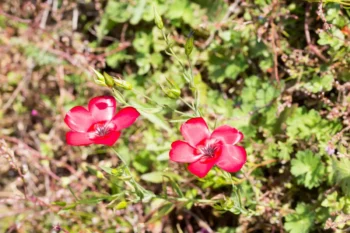
Flowering Flax: A Delicate Annual with Bold Blooms
If you’re looking for an easy-care annual that delivers stunning color with minimal fuss, flowering flax (Linum grandiflorum) might just be your new garden friend. This charming plant, also known as red flax or scarlet flax, brings a touch of Mediterranean magic to gardens across the United States with its papery, silk-like blooms that dance in the breeze.
What Is Flowering Flax?
Flowering flax is an annual forb that belongs to the flax family. Unlike its cousin grown for fiber and seeds, this ornamental version is all about putting on a show. The plant produces delicate, five-petaled flowers in brilliant shades of red, pink, or white that seem to glow when backlit by the sun. Its fine, linear leaves create an airy texture that complements the ethereal quality of the blooms.
Where Does It Come From?
Originally hailing from North Africa, particularly Algeria, Morocco, and Tunisia, flowering flax has made itself at home in various regions across the United States. You’ll find it growing in California, Colorado, Florida, Kentucky, Nebraska, New York, Ohio, Texas, and Utah, where it has naturalized and reproduces on its own in the wild.
- Species observed
- No observations
Garden Appeal and Design Uses
Flowering flax brings several appealing qualities to the garden:
- Delicate, papery flowers in vibrant colors
- Fine-textured foliage that creates an airy feel
- Self-seeding habit for effortless garden continuity
- Excellent for cutting and fresh bouquets
- Attracts beneficial pollinators like bees and butterflies
This versatile annual works beautifully in cottage gardens, wildflower meadows, annual borders, and rock gardens. Its delicate appearance makes it perfect for softening harsh edges or filling gaps between perennials. The flowers also make lovely cut flowers, though they’re best picked early in the morning when fully hydrated.
Growing Conditions and Care
One of flowering flax’s best qualities is how easy it is to grow. Here’s what it needs to thrive:
- Sunlight: Full sun for best flowering
- Soil: Well-draining soil; tolerates poor, sandy, or rocky conditions
- Water: Drought tolerant once established; avoid overwatering
- Climate: Can be grown as an annual in USDA zones 2-11
Planting and Care Tips
Getting flowering flax started in your garden couldn’t be simpler:
- Direct sow seeds in spring after the last frost or in fall in mild climates
- Scatter seeds on prepared soil and lightly rake in
- Seeds germinate quickly, usually within 7-14 days
- Thin seedlings to about 6 inches apart for best growth
- Minimal fertilization needed; too much can reduce flowering
- Allow some plants to go to seed for natural reseeding
The plant typically reaches 12-24 inches in height and spreads about 6-12 inches wide. Its fine texture means it won’t overwhelm neighboring plants, making it an excellent companion for bolder flowers.
Considerations for Gardeners
While flowering flax is a delightful addition to many gardens, there are a few things to keep in mind. As a non-native species that readily self-seeds, it can spread beyond where you originally planted it. This isn’t necessarily problematic, but it’s worth considering if you prefer a more controlled garden design.
For gardeners interested in supporting local ecosystems, consider also incorporating native alternatives such as wild bergamot, native penstemons, or regional wildflowers that provide similar aesthetic appeal while supporting local wildlife more effectively.
The Bottom Line
Flowering flax offers gardeners an easy way to add color and movement to their landscapes. Its low-maintenance nature, beautiful blooms, and ability to attract pollinators make it a worthy consideration for many garden styles. Just remember to balance non-native plants like this one with native species to create a garden that’s both beautiful and beneficial to local wildlife.
Whether you’re creating a cottage garden, filling in a wildflower meadow, or simply want something pretty and easy to grow, flowering flax delivers reliable results with minimal effort – and sometimes, that’s exactly what a gardener needs.