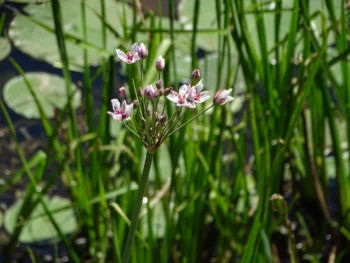
Flowering Rush: A Beautiful But Problematic Water Plant
If you’ve ever spotted a stunning pink-flowered plant growing along a pond edge or wetland margin, there’s a good chance you were looking at flowering rush (Butomus umbellatus). While this perennial might catch your eye with its showy blooms, there’s more to this plant than meets the eye – and unfortunately, it’s not all good news for North American gardeners and ecosystems.
What is Flowering Rush?
Flowering rush is a non-native perennial that originally hails from Europe and Asia. Despite its common name, it’s not actually a true rush – it gets its moniker from its grass-like appearance and tendency to grow in marshy areas. This aquatic plant is an obligate wetland species, meaning it almost always occurs in wetlands and thrives in consistently moist to wet conditions.
The plant produces distinctive umbrella-like clusters of pink to rose-colored flowers that bloom from summer into early fall, rising above sword-shaped leaves that can reach 2-4 feet in height. While undeniably attractive, this beauty comes with a serious catch.
The Invasive Problem
Here’s the important part: Flowering rush is considered invasive or restricted in multiple states and provinces across North America. It has established populations and reproduces spontaneously in the wild without human help, persisting in both Canada and the lower 48 states.
Currently, flowering rush is found across a wide geographic range including:
- Canadian provinces: Alberta, British Columbia, Manitoba, New Brunswick, Nova Scotia, Ontario, Prince Edward Island, and Quebec
- U.S. states: Connecticut, Idaho, Illinois, Indiana, Maine, Michigan, Minnesota, Montana, Nebraska, New York, North Dakota, Ohio, Pennsylvania, South Dakota, Vermont, and Wisconsin
- Species observed
- No observations
Several states have taken regulatory action against this plant:
- Connecticut: Potentially Invasive, Prohibited
- Michigan: Invasive, Restricted
- Minnesota: Prohibited
- North Dakota: Aquatic Nuisance (Class 2, Regulated)
- Wisconsin: Restricted
Why You Shouldn’t Plant Flowering Rush
While flowering rush might seem like an ideal choice for water gardens or bog areas – it’s hardy in USDA zones 3-10, attracts pollinators like bees and flies, and produces gorgeous blooms – its invasive nature makes it a poor choice for responsible gardeners.
Once established, flowering rush can quickly spread and dominate wetland areas, crowding out native plants that local wildlife depends on. Its aggressive growth habit allows it to form dense colonies that can alter entire aquatic ecosystems.
Better Alternatives for Your Water Garden
Instead of risking the ecological problems that come with flowering rush, consider these native alternatives that can provide similar beauty without the environmental concerns:
- Blue flag iris (Iris versicolor) – offers striking purple-blue flowers
- Wild bergamot (Monarda fistulosa) – attracts pollinators and has aromatic foliage
- Cardinal flower (Lobelia cardinalis) – produces brilliant red spikes
- Various native sedges and rushes for texture and form
If You Already Have Flowering Rush
If flowering rush is already established on your property, consider having it professionally removed, especially if you live in an area where it’s regulated. Early detection and removal is key to preventing further spread.
The bottom line? While flowering rush might be tempting for its undeniable beauty and easy-care nature in wet conditions, its invasive status makes it a plant that’s better admired from afar than welcomed into our gardens. There are plenty of native alternatives that can give you the same stunning water garden aesthetic without the ecological baggage.