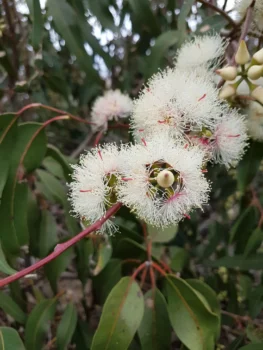
Forest Redgum: A Towering Australian Beauty for Spacious Landscapes
If you’ve ever dreamed of having a majestic tree that looks like it belongs in an Australian landscape painting, meet the forest redgum (Eucalyptus tereticornis). This impressive perennial tree brings a touch of the Australian outback to American gardens, though it’s definitely not a plant for everyone or every space.
What Exactly is Forest Redgum?
Forest redgum, scientifically known as Eucalyptus tereticornis, is a large deciduous tree that can tower over your landscape at heights greater than 13-16 feet – and that’s just getting started! In ideal conditions, these trees can reach truly impressive heights. As a member of the eucalyptus family, it shares the characteristic smooth, peeling bark and aromatic leaves that make eucalyptus trees so distinctive.
You might also see this tree referred to by its botanical synonym, Eucalyptus umbellatus, though forest redgum is the name that’ll serve you best when shopping at nurseries.
Where Does Forest Redgum Call Home?
Originally hailing from the eastern coast of Australia, forest redgum has made itself quite comfortable in certain parts of the United States. You’ll find established populations in California and Hawaii, where the climate suits this Australian native just fine. In these areas, it reproduces naturally and has become part of the local landscape.
- Species observed
- No observations
The Good, The Not-So-Good, and The Beautiful
Let’s be honest about forest redgum – it’s a tree that demands respect and space. Here’s what you need to know:
Why You Might Love It:
- Stunning visual appeal with mottled bark in creamy whites, grays, and reddish tones
- Provides excellent shade once mature
- Drought tolerant after establishment
- Attracts pollinators with its small white flower clusters
- Fast-growing for quick landscape impact
Why You Might Want to Think Twice:
- Gets extremely large – not suitable for small properties
- Can be messy, dropping bark strips and leaves regularly
- Non-native species that may outcompete local plants
- Requires significant space to reach its full potential
Growing Your Forest Redgum Successfully
If you’ve got the space and you’re sold on this Australian beauty, here’s how to help it thrive:
Location, Location, Location
Forest redgum needs full sun and plenty of room to spread out. This isn’t a tree for cozy suburban lots – think rural properties, large estates, or spacious parks. It thrives in USDA hardiness zones 9-11, so folks in warmer climates have the best shot at success.
Soil and Water Needs
This tree isn’t particularly fussy about soil, but it does appreciate good drainage. Once established, forest redgum handles drought like a champ – a trait that serves it well in California’s dry summers. Young trees will need regular watering to get established, but mature specimens are quite self-sufficient.
Care and Maintenance
The beauty of forest redgum lies partly in its low-maintenance nature. Minimal pruning is required, though you’ll want to remove any dead or damaged branches. Just be prepared for the ongoing cleanup of naturally shed bark and leaves – it’s part of the eucalyptus experience!
Consider Native Alternatives
While forest redgum can be a striking addition to the right landscape, consider exploring native alternatives that provide similar benefits without the ecological concerns of non-native species. Native oak species, for instance, can provide excellent shade and support local wildlife in ways that introduced species simply can’t match.
The Bottom Line
Forest redgum is undeniably beautiful and can create a stunning focal point in the right setting. However, its size requirements and non-native status mean it’s not the right choice for every gardener. If you have the space and are committed to responsible growing practices, this Australian import can bring unique character to your landscape. Just make sure you’re prepared for its impressive size and ongoing maintenance needs!