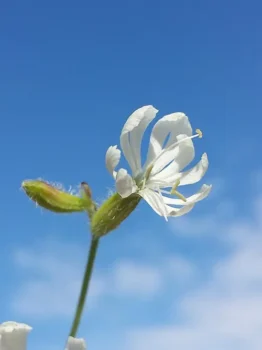
Forked Catchfly: An Unassuming Annual with European Roots
If you’ve ever noticed small, delicate white flowers growing along roadsides or in disturbed soil areas, you might have encountered forked catchfly (Silene dichotoma). This modest annual forb has quietly made itself at home across much of North America, despite its European origins.
What Is Forked Catchfly?
Forked catchfly is a non-native annual plant that belongs to the carnation family. As a forb, it’s an herbaceous plant without woody stems, completing its entire life cycle within a single growing season. The plant gets its name from its characteristic branching pattern and the slightly sticky stems that can catch small insects.
Where You’ll Find It
Originally from Europe and western Asia, forked catchfly has spread extensively across North America. You can find it growing in an impressive range of locations, from British Columbia to Nova Scotia in Canada, and throughout most U.S. states including Arkansas, California, Colorado, Connecticut, Delaware, Georgia, and many others. It’s particularly common in disturbed soils, roadsides, and waste areas.
- Species observed
- No observations
What Does It Look Like?
Forked catchfly produces small, white flowers with deeply notched petals that give them a distinctive forked appearance. The flowers are quite tiny and delicate, creating an airy, subtle display rather than a bold garden statement. The plant typically grows as a branching annual with narrow leaves and can form dense patches under the right conditions.
Growing Conditions and Care
If you’re curious about growing forked catchfly, it’s surprisingly undemanding:
- Thrives in full sun locations
- Tolerates poor, sandy, or gravelly soils
- Drought tolerant once established
- Suitable for USDA hardiness zones 3-9
- Self-seeds readily, requiring minimal intervention
The plant essentially takes care of itself, which explains its success in colonizing disturbed areas across the continent.
Should You Plant Forked Catchfly?
While forked catchfly isn’t necessarily harmful, it’s worth considering native alternatives that provide better support for local wildlife and ecosystems. Native plants have co-evolved with local pollinators, birds, and other wildlife, offering superior ecological benefits.
If you’re drawn to small, delicate white flowers, consider these native alternatives:
- Wild bergamot (Monarda fistulosa) for larger, more pollinator-friendly blooms
- White wild indigo (Amorpha canescens) for similar drought tolerance
- Local native asters or goldenrods for late-season interest
The Bottom Line
Forked catchfly is a resilient little plant that has found its niche in North American landscapes. While it’s not problematic, native gardeners typically have better options that provide more benefits to local wildlife. If you already have forked catchfly growing on your property, it’s harmless to leave it be, but when planning new plantings, consider choosing native species that will better support your local ecosystem.
Remember, the most successful gardens often combine beauty with ecological function, creating spaces that are both visually appealing and beneficial to the web of life around us.