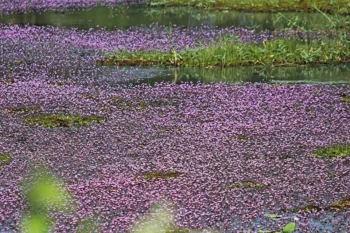
Forked Fanwort: An Aquatic Plant for Water Garden Enthusiasts
If you’re passionate about water gardening and always on the lookout for unique aquatic plants, you might have stumbled across forked fanwort (Cabomba furcata). This underwater beauty belongs to the fascinating world of aquatic plants, though it’s one that comes with some important considerations for the conscious gardener.
What is Forked Fanwort?
Forked fanwort is a perennial aquatic plant that lives its life completely submerged in water. As a forb, it’s an herbaceous plant without woody stems, relying instead on soft, flexible tissue that sways gracefully with water currents. You might also see it listed under its scientific synonym Cabomba piauhyensis in some older references.
Where Does It Come From?
Here’s where things get interesting from a native gardening perspective. Forked fanwort isn’t originally from North American waters. It’s been introduced to Puerto Rico, where it has established itself and now reproduces naturally in the wild. This makes it a non-native species in the Caribbean region.
- Species observed
- No observations
A True Water Baby
Forked fanwort is what botanists call an obligate wetland plant, which is a fancy way of saying it absolutely must have its feet wet – or in this case, its entire body submerged. This plant almost always occurs in wetland environments and simply cannot survive in typical garden soil conditions.
Should You Grow Forked Fanwort?
This is where responsible gardening comes into play. While forked fanwort isn’t currently listed as invasive, its status as a non-native species that readily reproduces in the wild should give water gardeners pause. Here are some key considerations:
- Limited information exists about its specific growing requirements and potential environmental impacts
- As a non-native species, it may not provide the same ecological benefits as native aquatic plants
- Its ability to reproduce spontaneously means it could potentially spread beyond your intended growing area
Native Alternatives to Consider
Before settling on forked fanwort, consider exploring native aquatic plants that can provide similar aesthetic appeal while supporting local ecosystems. Native water plants typically offer better wildlife habitat, support local pollinators, and won’t pose risks of uncontrolled spread. Check with your local native plant society or extension office for recommendations specific to your region.
If You Choose to Grow It
Should you decide to include forked fanwort in your water garden, remember that specific growing information for this species is quite limited. Based on its obligate wetland status, it will need:
- Complete submersion in water
- Likely prefers still or slow-moving water
- Unknown temperature and hardiness requirements
- Contained growing environment to prevent spread
The Bottom Line
While forked fanwort might seem like an intriguing addition to your aquatic garden, the combination of limited growing information and its non-native status makes it a questionable choice for environmentally conscious gardeners. Your water garden will likely thrive better with well-researched native alternatives that support local wildlife while providing the beauty and interest you’re seeking.
Remember, the most rewarding gardens are those that work in harmony with local ecosystems – and that usually means choosing plants that belong in your neck of the woods!