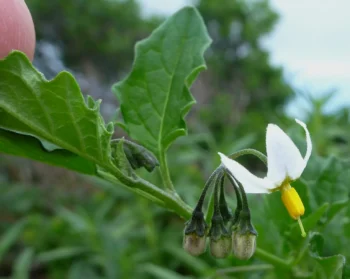
Forked Nightshade: An Uncommon Perennial with Limited Garden Appeal
If you’ve stumbled across the name forked nightshade in your plant research, you’re likely dealing with one of the more obscure members of the nightshade family. Solanum furcatum is a perennial herb that has quietly established itself in parts of the western United States, though it remains relatively unknown in gardening circles.
What Is Forked Nightshade?
Forked nightshade is a non-native perennial that belongs to the large Solanum genus, which includes familiar plants like tomatoes, potatoes, and eggplants. As a forb herb, it’s a soft-stemmed plant without the woody growth you’d find in shrubs or trees. True to its perennial nature, it returns year after year, with its growing points staying close to or below ground level during dormant periods.
Where You’ll Find It
This introduced species has made itself at home in California and Oregon, where it reproduces on its own without human intervention. While it’s established in these western states, forked nightshade isn’t spreading aggressively or causing major ecological disruptions—at least, not that we know of based on current records.
- Species observed
- No observations
The Challenge with Forked Nightshade
Here’s where things get a bit tricky for gardeners: there’s remarkably little information available about growing Solanum furcatum. Unlike its famous cousins in the vegetable garden, this particular nightshade hasn’t captured the attention of horticulturists or garden writers. We don’t have solid details about:
- Preferred growing conditions
- Mature size and growth rate
- Flower appearance or timing
- Cold hardiness zones
- Propagation methods
- Potential benefits for pollinators or wildlife
Should You Grow Forked Nightshade?
Given the limited information available about this plant’s garden performance and ecological impact, most gardeners would be better served by choosing well-documented alternatives. Since forked nightshade is non-native to North America, consider these native options that provide similar herbaceous perennial structure:
- Native wildflowers appropriate to your region
- Indigenous plants from the same plant families
- Well-researched native perennials with known benefits
If You Encounter It
If you find forked nightshade growing in your area, observe it with interest but caution. Like other members of the nightshade family, it may contain compounds that are toxic if ingested. Without clear information about its ecological role or potential invasiveness, it’s wise to monitor any populations you encounter and avoid deliberately spreading it.
The Bottom Line
While forked nightshade represents an interesting botanical puzzle, it’s not a practical choice for most gardeners. The lack of available growing information, combined with its non-native status, makes it a poor candidate for intentional cultivation. Instead, focus your energy on native plants with proven track records for supporting local ecosystems and providing reliable garden performance.
Sometimes the most responsible gardening choice is recognizing when a plant, however intriguing, simply isn’t right for our gardens—leaving it to exist in its adopted wild spaces while we cultivate better-understood alternatives.