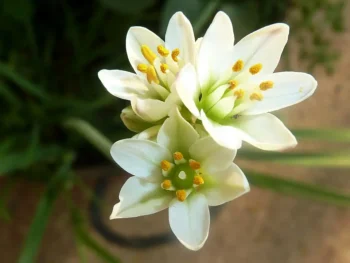
Fragrant False Garlic: A Sweet-Scented Bulb with a Deceptive Name
Don’t let the name fool you – fragrant false garlic (Nothoscordum borbonicum) won’t add any zing to your cooking! This charming little bulbous plant gets its moniker from its onion-like appearance, but thankfully lacks the pungent smell of its garlic relatives. Instead, it offers gardeners delicate white flowers with a surprisingly sweet fragrance that’s nothing like what you’d expect from anything with garlic in the name.
What Is Fragrant False Garlic?
Fragrant false garlic is a perennial forb that grows from small bulbs, producing narrow, grass-like leaves and clusters of small white flowers. As a member of the amaryllis family, it’s related to true onions and garlic but lacks their characteristic odor and flavor. The plant has collected quite a few scientific aliases over the years, including Allium fragrans and Nothoscordum gracile, which can make identifying it in plant catalogs a bit of a treasure hunt.
Where Does It Grow?
Originally hailing from South America (specifically Uruguay and Argentina), fragrant false garlic has made itself at home across the southeastern and parts of the western United States. You’ll find it growing wild in Alabama, California, Florida, Georgia, Louisiana, Mississippi, Oregon, South Carolina, Tennessee, and Virginia. As a non-native species that reproduces on its own in the wild, it’s proven quite adaptable to various American climates.
- Species observed
- No observations
Garden Appeal and Landscape Use
This modest plant won’t win any awards for showiness, but it has its charms. The small white flowers appear in neat umbel clusters atop slender stems, creating a delicate, cottage garden feel. Here’s what makes it appealing to some gardeners:
- Sweet, pleasant fragrance from the flowers
- Low-maintenance once established
- Naturalizes easily for informal garden areas
- Attracts small pollinators like bees and beneficial insects
- Drought tolerant after the first season
Growing Conditions and Care
Fragrant false garlic is surprisingly easy-going and thrives in USDA hardiness zones 7-10. It prefers well-drained soil and can handle everything from full sun to partial shade, making it quite versatile for different garden spots.
For successful growing:
- Plant bulbs in fall for spring blooms
- Choose a location with good drainage – soggy soil is its nemesis
- Water regularly the first season, then let nature take over
- Expect minimal pest and disease issues
- Allow plants to self-seed if you want them to spread naturally
A Word of Caution
While fragrant false garlic isn’t considered invasive, it can self-seed readily and spread beyond where you originally planted it. Some gardeners love this naturalizing tendency, while others prefer more predictable plants. Keep this in mind when choosing a planting location.
Native Alternatives to Consider
If you’re passionate about supporting local ecosystems with native plants, consider these alternatives that offer similar garden appeal:
- Wild garlic (Allium canadense) – truly native with edible bulbs
- Nodding onion (Allium cernuum) – graceful drooping flower heads
- Wild leek or ramps (Allium tricoccum) – beloved by foragers and native plant enthusiasts
The Bottom Line
Fragrant false garlic is a pleasant, low-maintenance bulb that can add subtle charm to informal garden areas. While it’s not native to North America, it’s also not considered a problematic invasive species. Whether you choose to grow it depends on your gardening philosophy and design goals. If you prefer supporting native ecosystems, the native Allium species mentioned above offer similar benefits with the added bonus of supporting local wildlife that co-evolved with these plants.
Whatever you choose, remember that the best garden is one that brings you joy while being mindful of the broader environment around us!