Fuller’s Teasel: A Beautiful But Problematic Plant to Avoid in Your Garden
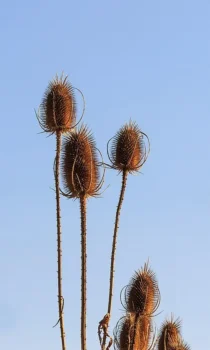
If you’ve ever spotted tall, spiky plants with egg-shaped purple flower heads standing like sentinels in abandoned fields or along roadsides, you’ve likely encountered Fuller’s teasel (Dipsacus fullonum). While this dramatic biennial might catch your eye with its architectural presence, there are compelling reasons why you should think twice before inviting it into your garden.
What is Fuller’s Teasel?
Fuller’s teasel is a non-native biennial forb that originally hails from Europe and western Asia. This hardy plant lacks woody stems but makes up for it with impressive height and structure. As a biennial, it spends its first year developing a basal rosette of leaves, then shoots up dramatically in its second year to produce flowers and seeds before dying.
The plant goes by several scientific synonyms including Dipsacus sylvestris, but regardless of what you call it, this species has made itself quite at home across North America—perhaps a little too much at home.
Where You’ll Find Fuller’s Teasel
Fuller’s teasel has spread across a vast range of North American territories and states, including Alabama, Arizona, Arkansas, California, Colorado, Connecticut, Delaware, Idaho, Illinois, Indiana, Iowa, Kansas, Kentucky, Maryland, Massachusetts, Michigan, Mississippi, Missouri, Montana, Nebraska, Nevada, New Hampshire, New Jersey, New Mexico, New York, North Carolina, Ohio, Oklahoma, Oregon, Pennsylvania, Rhode Island, South Dakota, Tennessee, Texas, Utah, Vermont, Virginia, Washington, West Virginia, Wisconsin, and Wyoming. It’s also established in Canadian provinces including British Columbia, Ontario, and Quebec.
- Species observed
- No observations
The Problem with Fuller’s Teasel
Here’s where things get concerning for gardeners and land managers. Fuller’s teasel isn’t just a non-native plant that’s naturalized—it’s classified as invasive in Missouri and restricted in Wisconsin. This means it reproduces aggressively, spreads without human intervention, and can outcompete native plants for resources.
The plant’s success stems from its adaptability. Fuller’s teasel thrives in USDA hardiness zones 3-9 and shows remarkable tolerance for various growing conditions. It can handle both wetland and upland sites, though it typically prefers non-wetland areas. This flexibility allows it to colonize disturbed soils, field edges, roadsides, and even well-maintained landscapes.
Why Gardeners Should Avoid Planting Fuller’s Teasel
Despite its undeniable visual appeal—those striking 2-6 foot tall stems topped with spiny, purple flower heads are genuinely eye-catching—Fuller’s teasel poses several problems:
- Aggressive self-seeding: One plant can produce thousands of seeds that remain viable for years
- Difficult to control: Once established, it’s challenging to eradicate
- Displaces native plants: Its rapid spread can crowd out beneficial native species
- Regulatory issues: In some states, growing invasive species may violate local regulations
- Spreads beyond gardens: Seeds easily disperse to natural areas, contributing to ecological disruption
Better Native Alternatives
Instead of risking the ecological problems that come with Fuller’s teasel, consider these native alternatives that offer similar architectural interest:
- Wild bergamot (Monarda fistulosa): Provides height and attracts pollinators without invasive tendencies
- Purple coneflower (Echinacea purpurea): Offers spiky seed heads for winter interest
- Rattlesnake master (Eryngium yuccifolium): Delivers unique texture and structure
- Compass plant (Silphium laciniatum): Creates dramatic vertical presence in prairie gardens
If You Already Have Fuller’s Teasel
If Fuller’s teasel has already established itself on your property, the best approach is removal before it can spread further. Cut flower heads before seeds develop, and dig up the entire taproot system. Be persistent—the seed bank in your soil may produce new plants for several years.
The Bottom Line
While Fuller’s teasel undoubtedly has ornamental appeal and does provide some benefits to pollinators during its blooming period, the risks far outweigh the benefits. As responsible gardeners, our goal should be supporting local ecosystems rather than potentially harming them. By choosing native alternatives, you can achieve the same dramatic garden effects while supporting biodiversity and avoiding regulatory headaches.
Remember: the most beautiful garden is one that works in harmony with its local environment, not against it.