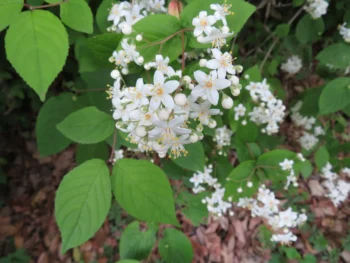
Fuzzy Pride-of-Rochester: A Non-Native Bloomer Worth Considering
Meet the fuzzy pride-of-Rochester (Deutzia scabra), a charming flowering shrub that’s been quietly making itself at home across much of the eastern United States. This non-native beauty from East Asia has established itself as a reliable garden performer, though it comes with some considerations worth exploring before you add it to your landscape.
What Exactly Is Fuzzy Pride-of-Rochester?
Fuzzy pride-of-Rochester is a deciduous shrub that typically grows 6-10 feet tall and wide, creating a nice rounded form in the landscape. As a perennial woody plant, it’s built to last, with multiple stems arising from the base and an upright, somewhat arching growth habit that gives it character throughout the seasons.
The fuzzy part of its name comes from the slightly rough texture of its leaves, while the delightfully ornate pride-of-Rochester moniker hints at its showy nature when in bloom.
Where You’ll Find It Growing
Originally from China, Japan, and Korea, this adaptable shrub has spread across 15 states in the U.S., from Connecticut down to Florida and as far west as Utah. It’s particularly well-established in the Mid-Atlantic and Northeast regions, where it reproduces on its own and has become a naturalized part of the landscape.
- Species observed
- No observations
The Good, The Beautiful, and The Practical
So why might you want fuzzy pride-of-Rochester in your garden? The star of the show is definitely its late spring to early summer flower display. Clusters of small, star-shaped white to pale pink blooms cover the shrub, creating a fragrant cloud of flowers that both you and local pollinators will appreciate. Bees and butterflies are particularly fond of the nectar-rich blooms.
Beyond the flowers, this shrub offers:
- Attractive peeling bark that adds winter interest
- Dense growth habit perfect for screening or privacy
- Relatively low maintenance once established
- Good drought tolerance
- Reliable performance in USDA zones 5-8
Growing Fuzzy Pride-of-Rochester Successfully
If you decide to give this shrub a try, you’ll find it’s pleasantly undemanding. Plant it in full sun to partial shade in well-drained soil, and you’re most of the way there. Spring or fall planting works best, giving the roots time to establish before extreme weather hits.
Care tips for success:
- Water regularly during the first year to help establish roots
- Prune immediately after flowering to maintain shape and encourage next year’s blooms
- Mulch around the base to retain moisture and suppress weeds
- Fertilize lightly in early spring if your soil is particularly poor
The Non-Native Consideration
Here’s where things get interesting from a native gardening perspective. While fuzzy pride-of-Rochester isn’t currently listed as invasive or noxious, it is a non-native species that has naturalized across multiple states. This means it’s reproducing and spreading on its own, which some gardeners prefer to avoid.
If you’re leaning toward supporting native ecosystems, consider these beautiful native alternatives that offer similar garden benefits:
- Native azaleas (Rhododendron species) for spectacular spring blooms
- Ninebark (Physocarpus opulifolius) for white flower clusters and interesting seed heads
- Spicebush (Lindera benzoin) for early spring flowers and wildlife value
- Native viburnums for flowers, fall color, and bird-attracting berries
Is It Right for Your Garden?
Fuzzy pride-of-Rochester works well in traditional cottage gardens, mixed shrub borders, and informal landscape designs. It’s particularly useful if you need a medium-sized shrub that can handle some neglect once established. The fragrant flowers and pollinator appeal are definite bonuses.
However, if your gardening philosophy leans toward supporting native species and local ecosystems, you might want to explore those native alternatives instead. There’s no wrong choice here – just different approaches to creating a beautiful, functional landscape.
Whatever you decide, remember that every garden is a personal expression, and the best plants are the ones that bring you joy while fitting your site’s conditions and your gardening goals.