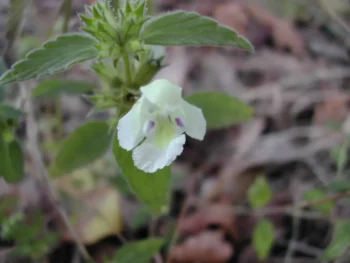
Galeopsis segetum: The Downy Hemp-nettle You Probably Haven’t Heard Of
Meet Galeopsis segetum, commonly known as Downy Hemp-nettle or Corn Hempnettle – a little European annual that’s more likely to show up uninvited in your garden than to be deliberately planted there. While it might not win any beauty contests, this humble herb has its own quiet charm and some surprising benefits for wildlife-conscious gardeners.
What Is Downy Hemp-nettle?
Galeopsis segetum is a member of the mint family (Lamiaceae) that originally hails from Europe, particularly the Mediterranean regions and parts of western Europe. You might also encounter it under its botanical synonym, Galeopsis villosa. This modest annual herb typically grows as a somewhat weedy-looking plant with small pink to purplish flowers that bloom throughout the growing season.
Where Does It Grow?
In its native European range, Downy Hemp-nettle thrives in disturbed soils, agricultural fields, and waste ground. It’s one of those adaptable plants that seems to find a way to establish itself wherever the soil has been turned or disturbed.
Should You Grow It?
Here’s the honest truth: Galeopsis segetum isn’t typically grown as an ornamental plant, and for good reason. Its aesthetic appeal is, shall we say, modest. However, there are a few scenarios where you might want to consider it:
- You’re creating a naturalized wildlife area
- You want to support small pollinators with minimal effort
- You’re interested in plants with historical or ethnobotanical significance
- You need something that can handle poor, disturbed soil
Wildlife and Pollinator Benefits
While it may not be a pollinator powerhouse, Downy Hemp-nettle does offer nectar and pollen to smaller bees, flies, and other tiny beneficial insects. Its seeds can also provide food for small birds, particularly finches who enjoy munching on seeds from plants in the mint family.
Growing Conditions and Care
If you do decide to give Galeopsis segetum a try, you’ll find it refreshingly low-maintenance:
- Light: Full sun to partial shade
- Soil: Tolerates poor, disturbed soils; actually prefers them over rich garden soil
- Water: Minimal watering needed once established
- Maintenance: Essentially none – it self-seeds readily
As an annual, it will complete its life cycle in one growing season, but don’t worry about replanting – it’s quite good at reseeding itself. Perhaps a little too good, which brings us to our next point.
A Word of Caution
While Galeopsis segetum isn’t classified as invasive in most areas, it can spread readily through self-seeding. Keep this in mind if you’re considering adding it to your garden, especially in smaller spaces where it might overwhelm more desirable plants.
Native Alternatives to Consider
Since Downy Hemp-nettle isn’t native to North America, you might want to consider these native alternatives that offer similar benefits with greater ecological value:
- Wild Bergamot (Monarda fistulosa): Also in the mint family, with showy lavender flowers
- Heal-all (Prunella vulgaris): Low-growing with purple flower spikes
- American Pennyroyal (Hedeoma pulegioides): Small annual mint with tiny flowers
The Bottom Line
Galeopsis segetum is one of those plants that’s more interesting for its adaptability and ecological role than its garden appeal. While it won’t transform your landscape into a showstopper, it can play a quiet supporting role in wildlife-friendly gardens, especially in areas where you want something tough and self-sufficient. Just remember that with great adaptability comes great responsibility – keep an eye on its spreading habits and consider whether a native alternative might better serve both your garden and local ecosystem.