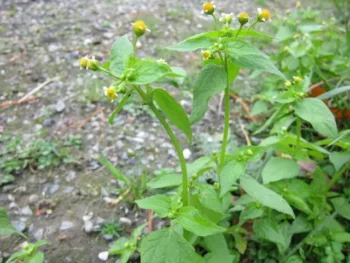
Gallant Soldier: The Tiny Wildflower That’s Probably Already in Your Garden
If you’ve ever noticed small, daisy-like flowers popping up uninvited in your vegetable garden or flower beds, chances are you’ve met gallant soldier (Galinsoga parviflora). This diminutive annual goes by many names – including galinsoga, littleflower quickweed, and small-flower galinsoga – but whatever you call it, this little plant has quite the story to tell.
What Is Gallant Soldier?
Gallant soldier is a small annual forb, which simply means it’s a soft-stemmed plant that completes its entire life cycle in one growing season. Originally native to Central and South America, this adaptable little plant has made itself at home across much of North America, from southern Canada all the way down to Puerto Rico.
The plant produces tiny white flowers with yellow centers that measure about 1/4 inch across. While individually small, these cheerful blooms appear in clusters and can add a delicate, cottage garden feel to areas where they grow. However, most gardeners encounter gallant soldier not as an intentional planting, but as an enthusiastic volunteer.
Where You’ll Find Gallant Soldier
This cosmopolitan little plant has spread far from its original home and now grows throughout most of the United States and parts of Canada. You can find it in Alabama, Arizona, Arkansas, California, Colorado, Connecticut, and dozens of other states, as well as in British Columbia, Manitoba, New Brunswick, Ontario, and Quebec.
- Species observed
- No observations
It’s worth noting that while gallant soldier is widespread, Alaska considers it a prohibited noxious weed, so if you’re gardening in the Last Frontier, you’ll want to remove any you find.
Growing Conditions and Habits
Gallant soldier is remarkably adaptable when it comes to growing conditions. As an obligate upland plant in most regions (meaning it almost never grows in wetlands), it prefers well-drained soils and thrives in disturbed, fertile ground. This is why you’ll often spot it in vegetable gardens, annual flower beds, and other cultivated areas.
The plant grows best in:
- Full sun to partial shade
- Moist, nitrogen-rich soils
- Disturbed or cultivated ground
- USDA hardiness zones 3-11 (as an annual)
Should You Grow Gallant Soldier?
Here’s where things get interesting. While gallant soldier isn’t technically classified as invasive, it’s definitely what you’d call an enthusiastic self-seeder. The plant can produce multiple generations in a single growing season, and each plant can generate thousands of seeds that disperse easily.
Most gardeners don’t intentionally plant gallant soldier because:
- It can quickly become weedy if left unchecked
- It competes with desired garden plants
- It’s considered a common garden weed in many areas
- Native alternatives provide better ecological benefits
The Wildlife Connection
While gallant soldier does attract some small pollinators and beneficial insects to its tiny flowers, it’s not considered a significant wildlife plant. If you’re looking to support local ecosystems, you’ll get much more bang for your buck by choosing native wildflowers that have co-evolved with your local wildlife.
Managing Gallant Soldier
If gallant soldier has already made itself at home in your garden, managing it is straightforward. The key is preventing it from going to seed:
- Pull young plants easily when soil is moist
- Remove flowers before they set seed
- Mulch around desired plants to suppress germination
- Hand-weed regularly during the growing season
Better Native Alternatives
Instead of gallant soldier, consider these native alternatives that offer similar delicate, small white flowers but provide better ecological value:
- White asters (various Symphyotrichum species)
- Pearly everlasting (Anaphalis margaritacea)
- Wild bergamot (Monarda fistulosa) for larger white blooms
- Native goldenrods (Solidago species) for yellow alternatives
The Bottom Line
Gallant soldier is one of those plants that demonstrates nature’s incredible adaptability. While it’s not inherently harmful, it’s also not the best choice for intentional cultivation in most North American gardens. If you’re drawn to its cottage garden charm, you’ll likely find it appearing on its own anyway – this little survivor rarely needs an invitation!
For gardeners focused on supporting native ecosystems and creating sustainable landscapes, investing in native wildflowers will give you more beautiful, ecologically valuable results. But if gallant soldier has already claimed a spot in your garden, at least now you know what to call your tiny, persistent visitor.