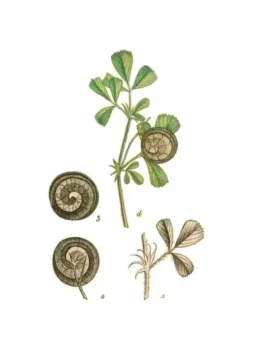
Gama Medic: A Mediterranean Annual for Hawaiian Gardens
If you’ve been exploring options for low-maintenance ground cover in Hawaii, you might have come across gama medic (Medicago rugosa), also known as wrinkled medick. This small annual legume has quietly made itself at home in the Hawaiian islands, offering some interesting possibilities for gardeners looking for drought-tolerant options.
What Exactly is Gama Medic?
Gama medic is an annual forb – essentially a non-woody plant that completes its entire life cycle in one growing season. As a member of the pea family, it shares that characteristic three-part leaf structure and small, bright yellow flowers that many gardeners find charming. Don’t expect towering heights though – this is definitely a ground-hugger that stays low and spreads modestly.
Where You’ll Find It Growing
Originally from the Mediterranean region, gama medic has established itself in Hawaii, where it grows and reproduces on its own without any human assistance. It’s currently found throughout the Hawaiian islands, having adapted well to the local climate conditions.
- Species observed
- No observations
The Good, The Bad, and The Practical
Since gama medic isn’t native to Hawaii, it’s worth considering both its benefits and potential drawbacks:
The positives: Like other legumes, gama medic has the superpower of fixing nitrogen in the soil, essentially fertilizing itself and nearby plants. It’s also remarkably drought-tolerant once established and requires minimal care – perfect for busy gardeners or those working with challenging sites.
The considerations: As a non-native species, it won’t provide the same ecological benefits as native Hawaiian plants. While it’s not currently listed as invasive, any non-native plant has the potential to spread beyond where you want it.
Growing Conditions and Care
If you decide to try gama medic, you’ll find it refreshingly undemanding:
- Sunlight: Prefers full sun but can tolerate some light shade
- Soil: Thrives in well-draining soils; actually prefers lean, less fertile conditions
- Water: Drought-tolerant once established, but benefits from occasional watering during dry spells
- Climate: Best suited for USDA zones 9-11, making it ideal for Hawaii’s warm climate
Planting and Maintenance Tips
Growing gama medic is straightforward:
- Start from seed in fall or early spring
- Scatter seeds directly where you want them to grow
- Lightly rake soil to ensure good seed-to-soil contact
- Water gently until germination occurs
- Once established, minimal care is needed
As an annual, gama medic will self-seed if conditions are right, potentially returning year after year without replanting.
Garden Design Ideas
Gama medic works well in:
- Mediterranean-style gardens
- Naturalized or wildflower areas
- Erosion control on slopes
- Low-maintenance ground cover areas
Supporting Pollinators
The small yellow flowers do attract beneficial insects, including small native bees and other pollinators, though the benefits aren’t as significant as those provided by native Hawaiian flowering plants.
Native Alternatives to Consider
If you’re interested in supporting Hawaii’s native ecosystem, consider these indigenous alternatives that offer similar ground-covering benefits:
- Native Hawaiian sedges and grasses
- Indigenous groundcovers like ‘aki’aki (Sporobolus virginicus)
- Native beach morning glory (Ipomoea pes-caprae)
The Bottom Line
Gama medic can be a practical choice for specific situations – particularly where you need low-maintenance ground cover in challenging conditions. However, whenever possible, prioritizing native Hawaiian plants will better support local wildlife and maintain the islands’ unique ecological character. If you do choose to grow gama medic, keep an eye on its spread and be prepared to manage it responsibly.