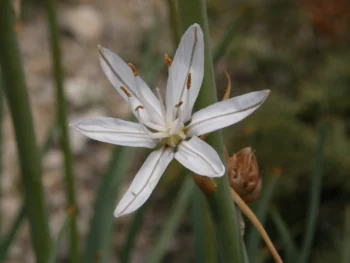
Gamón-Blanco: A Mediterranean Beauty for Drought-Tolerant Gardens
If you’ve been dreaming of creating a Mediterranean-style garden that can handle drought conditions while still putting on a stunning floral show, let me introduce you to gamón-blanco (Asphodelus albus). This striking perennial might not be a household name, but it’s been quietly winning over gardeners who appreciate plants that deliver big impact with minimal fuss.
What is Gamón-Blanco?
Gamón-blanco, scientifically known as Asphodelus albus, is a Mediterranean native that belongs to the lily family. You might also encounter it under the synonym Asphodelus sphaerocarpus. This plant is like that reliable friend who shows up looking effortlessly elegant – it produces tall, architectural spikes of pristine white, star-shaped flowers that can reach 3-4 feet in height, rising above clumps of narrow, grass-like foliage.
Where Does It Come From?
This beauty hails from the Mediterranean region, where it naturally occurs across Spain, Portugal, France, Italy, Greece, and parts of North Africa. In its native habitat, it thrives in rocky, well-draining soils and has adapted to survive long, dry summers followed by mild, wet winters.
Why Consider Growing Gamón-Blanco?
There are several compelling reasons why this Mediterranean native might deserve a spot in your garden:
- Drought tolerance: Once established, it requires minimal supplemental watering
- Stunning flowers: Produces impressive spikes of white, star-shaped blooms in late spring and early summer
- Pollinator magnet: Bees, butterflies, and other beneficial insects absolutely love the abundant flowers
- Low maintenance: Thrives in poor to moderately fertile soils with little care
- Architectural interest: The tall flower spikes create dramatic vertical elements in the landscape
Perfect Garden Settings
Gamón-blanco shines in specific garden styles and conditions. It’s particularly well-suited for:
- Mediterranean-style gardens
- Xeriscape and drought-tolerant landscapes
- Rock gardens and gravel gardens
- Coastal gardens (it tolerates salt spray well)
- Naturalized areas where it can spread and form colonies
Growing Conditions and Care
The beauty of gamón-blanco lies in its simplicity. Here’s what it needs to thrive:
Sunlight: Full sun is essential for the best flowering performance.
Soil: Well-draining soil is non-negotiable. It actually prefers poor to moderately fertile soils and can struggle in overly rich, moist conditions.
Hardiness: Hardy in USDA zones 7-10, making it suitable for much of the southern and western United States.
Water: While it needs regular water during its first growing season, once established, it’s remarkably drought tolerant.
Planting and Care Tips
Getting gamón-blanco established in your garden is refreshingly straightforward:
- Timing: Plant in fall for best establishment
- Spacing: Allow 2-3 feet between plants as they’ll form expanding clumps over time
- Watering: Water regularly the first year, then reduce to occasional deep watering during extended dry periods
- Maintenance: Deadhead spent flower spikes to prevent excessive self-seeding, though some gardeners enjoy the naturalized look
- Division: Divide clumps every 3-4 years in fall to maintain vigor and spread your collection
A Word About Native Alternatives
While gamón-blanco can be a wonderful addition to appropriate garden settings, consider exploring native alternatives that might provide similar aesthetic appeal while supporting local ecosystems. Depending on your region, native options like desert willow, yucca species, or native bunch grasses might offer comparable drought tolerance and architectural interest.
The Bottom Line
Gamón-blanco offers Mediterranean elegance and drought tolerance wrapped up in one impressive package. If you’re gardening in zones 7-10 and want a low-maintenance perennial that delivers spectacular spring blooms while attracting pollinators, this could be your new garden star. Just remember to give it the well-draining conditions it craves, and it’ll reward you with years of stunning floral displays that seem to float above the landscape like white fireworks frozen in time.