Garlic Mustard: The Invasive Plant You Should Never Invite to Your Garden Party
If you’ve ever wondered about that seemingly innocent white-flowered plant popping up in your garden or local woods, you might be looking at garlic mustard (Alliaria petiolata). While it may look harmless enough with its delicate spring blooms, this European native is actually one of North America’s most problematic invasive plants. Let’s dive into why this green gate-crasher should definitely not be on your gardening wish list.
What Is Garlic Mustard?
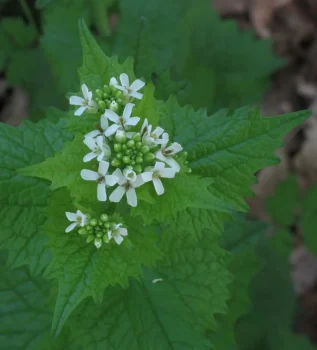
Garlic mustard is a biennial forb that lives up to its name—crush a leaf and you’ll get a distinct garlicky smell. This herbaceous plant lacks woody tissue and produces small, white, four-petaled flowers clustered at the top of stems that can reach 2-4 feet tall. The heart-shaped leaves have serrated edges and form a rosette in the first year before the plant bolts and flowers in its second year.
A European Expat Gone Rogue
Originally from Europe, western and central Asia, garlic mustard was likely brought to North America by European settlers in the 1800s, possibly for culinary or medicinal purposes. Unfortunately, what seemed like a good idea at the time has turned into an ecological nightmare.
Where This Troublemaker Has Spread
Garlic mustard has now established itself across a vast range of North American territories, including Alaska, most Canadian provinces, and the majority of U.S. states from coast to coast. It’s found everywhere from British Columbia to Nova Scotia, and from Washington State down to Georgia, with scattered populations in many states in between.
- Species observed
- No observations
Why Garlic Mustard Is Garden Enemy #1
Here’s where things get serious. Garlic mustard isn’t just another non-native plant—it’s officially classified as invasive in multiple states and even listed as a prohibited species in some areas. The invasive status varies by location:
- Connecticut: Invasive, Prohibited
- Delaware, Michigan, North Carolina: Invasive
- Missouri: Invasive (Department of Conservation and Invasive Plant Council)
- Wisconsin: Restricted
- Alabama: Class A noxious weed and Watch List species
This plant is particularly problematic because it:
- Displaces native wildflowers and plants
- Releases chemicals that inhibit the growth of other plants (allelopathy)
- Disrupts relationships between native plants and their specialized pollinators
- Threatens the survival of native species that depend on displaced plants
Habitat Preferences: Where It Thrives
Garlic mustard is frustratingly adaptable. It typically prefers partial shade but can tolerate full sun, and it’s happy in various soil conditions from moist to relatively dry. Most regions classify it as facultative upland, meaning it usually grows in non-wetland areas but can occasionally pop up in wetland edges. This adaptability is part of what makes it such a successful invader.
The Pollinator Paradox
While garlic mustard flowers do provide some nectar for pollinators, this is a classic case of be careful what you wish for. The plant may offer a quick snack for bees and other pollinators, but it’s simultaneously crowding out native plants that have co-evolved with local pollinator species over thousands of years. Native plants provide specialized, nutritionally superior resources that invasive plants simply can’t match.
What to Do Instead: Native Alternatives
Rather than allowing garlic mustard to take over, consider these native alternatives that provide similar aesthetic appeal without the ecological baggage:
- Wild ginger (Asarum canadense) for shaded areas
- Toothwort species (Cardamine/Dentaria) for early spring white flowers
- Wild leek or ramps (Allium tricoccum) for the garlic connection
- Bloodroot (Sanguinaria canadensis) for early white blooms
Identification and Removal
If you find garlic mustard on your property, the best approach is removal. Look for:
- Heart-shaped, serrated leaves that smell like garlic when crushed
- First-year plants that form low rosettes
- Second-year plants with tall stems topped by clusters of small white flowers
- Long, narrow seed pods that develop after flowering
Hand-pulling is most effective in early spring when the soil is moist. Be sure to get the entire root system, and dispose of plants in municipal waste rather than composting, as seeds can remain viable.
The Bottom Line
While garlic mustard might seem like just another pretty wildflower, it’s actually an ecological bully that doesn’t play well with others. Instead of rolling out the welcome mat for this invasive species, focus your gardening efforts on native plants that will support local wildlife and maintain the natural balance of your local ecosystem. Your native pollinators, birds, and neighboring wild plants will thank you for it!
Remember: when it comes to garlic mustard, the best garden management strategy is thanks, but no thanks. There are plenty of beautiful native alternatives that will give you the aesthetic appeal you’re looking for without the ecological consequences.