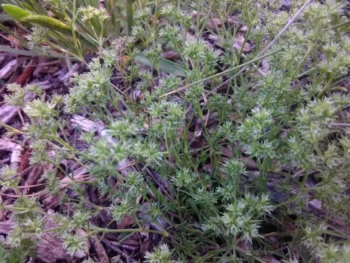
German Knotgrass: A Modest Annual for Challenging Garden Spots
Meet German knotgrass (Scleranthus annuus), a humble little annual that probably won’t win any beauty contests but might just solve some of your trickiest gardening challenges. This unassuming plant has quietly made itself at home across North America, and while it’s not native to our continent, it’s earned a reputation as a reliable performer in spots where other plants struggle to survive.
What Exactly Is German Knotgrass?
German knotgrass is a small annual forb – basically a non-woody plant that completes its entire life cycle in one growing season. Don’t let the grass in its name fool you; it’s not actually a grass at all. This low-growing plant forms neat little mats and belongs to the carnation family, though you’d never guess it from looking at its tiny, almost invisible green flowers.
Originally from Europe, particularly the Mediterranean region, German knotgrass has naturalized throughout much of North America. You’ll find it growing wild in almost every U.S. state and several Canadian provinces, from coast to coast.
- Species observed
- No observations
Should You Plant German Knotgrass?
Here’s the honest truth: German knotgrass isn’t going to be the star of your garden show. Its flowers are so small they’re practically microscopic, and it won’t attract butterflies or hummingbirds to your yard. So why might you consider it?
Reasons you might want it:
- It thrives in poor, sandy soils where other plants give up
- Extremely drought tolerant once established
- Forms a low, tidy ground cover
- Perfect for filling difficult spots in rock gardens
- Requires virtually no maintenance
- Self-seeds reliably for next year’s coverage
Reasons you might skip it:
- Minimal ornamental value
- No benefits for pollinators (wind-pollinated)
- Limited wildlife value
- It’s not native to North America
- Can self-seed aggressively in ideal conditions
Native Alternatives to Consider
Since German knotgrass isn’t native to North America, you might want to consider some indigenous alternatives that can fill similar roles while supporting local ecosystems. Look for native sedums, wild strawberry (Fragaria virginiana), or regional native ground covers that thrive in poor soils in your area.
Growing German Knotgrass Successfully
If you decide German knotgrass fits your needs, you’ll be happy to know it’s incredibly easy to grow – perhaps too easy in some situations!
Growing Conditions:
- Soil: Prefers sandy, well-draining, poor soils (rich soil actually makes it less happy)
- Sun: Full sun is best, though it tolerates some shade
- Water: Drought tolerant; actually prefers dry conditions
- Hardiness: As an annual, it grows in USDA zones 3-9
Planting and Care Tips
German knotgrass is refreshingly low-maintenance:
- Seeding: Scatter seeds directly in early spring or fall
- Spacing: Don’t worry too much – it self-regulates pretty well
- Watering: Only water during establishment; after that, leave it alone
- Fertilizing: Don’t! It prefers poor soil and too much nutrition makes it leggy
- Maintenance: Virtually none required
Where It Fits in Your Landscape
German knotgrass works best in specific situations rather than as a general garden plant. Consider it for:
- Rock gardens and alpine settings
- Spaces between stepping stones
- Poor soil areas where nothing else thrives
- Naturalized or wild garden sections
- Erosion control on slopes with poor soil
A Word of Caution
While German knotgrass isn’t considered invasive, it can self-seed enthusiastically in ideal conditions. Keep an eye on it and remove unwanted seedlings if it starts spreading beyond where you want it. In most regions, it has a facultative upland wetland status, meaning it typically sticks to drier areas but might occasionally pop up in wetter spots.
The Bottom Line
German knotgrass is the gardening equivalent of a reliable utility player – not flashy, but dependable when you need something that works in tough conditions. It’s perfect for those challenging spots where you’ve given up on growing anything prettier, and it asks for almost nothing in return. Just remember that as a non-native species, it won’t support local wildlife the way native alternatives would, so consider your garden’s broader ecological role when making your choice.