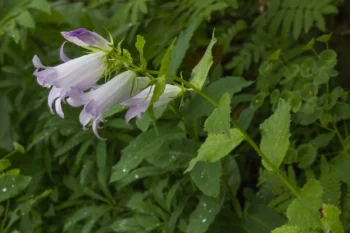
Giant Bellflower: A Towering Beauty for Your Garden
Meet the giant bellflower (Campanula latifolia), a statuesque perennial that lives up to its name with impressive height and show-stopping blooms. This European native has found its way into North American gardens, where it continues to charm gardeners with its old-world appeal and easy-going nature.
What Makes Giant Bellflower Special?
Standing tall at 3 to 5 feet, giant bellflower is anything but shy. Its large, bell-shaped flowers in shades of purple-blue create a stunning vertical display from mid to late summer. As a herbaceous perennial, it dies back to the ground each winter and returns reliably each spring, making it a dependable addition to your garden’s cast of characters.
Where Does It Come From?
Originally from Europe and western Asia, giant bellflower has established itself as a non-native species in parts of North America. You can find it growing in Connecticut, Quebec, Maine, Pennsylvania, Vermont, and Wisconsin, where it has naturalized and reproduces on its own.
- Species observed
- No observations
Garden Design Possibilities
Giant bellflower shines in several garden settings:
- Back-of-border plantings where its height won’t overshadow shorter companions
- Cottage gardens where its informal, romantic appearance fits perfectly
- Woodland gardens with dappled light conditions
- Naturalized areas where it can spread and create drifts
Growing Conditions and Care
One of giant bellflower’s most appealing qualities is its adaptability. This easy-going perennial thrives in USDA hardiness zones 3-8, making it suitable for a wide range of climates.
Light requirements: Partial shade to full sun, though it appreciates some afternoon shade in hotter climates
Soil preferences: Moist, well-drained soil of various types – it’s not particularly fussy
Maintenance tips:
- Deadhead spent flowers to encourage continued blooming
- Allow some flowers to go to seed if you want natural spreading
- Divide clumps every 3-4 years to maintain vigor
- Mulch around plants to retain moisture
Pollinator and Wildlife Benefits
Giant bellflower isn’t just pretty to look at – it’s also a valuable food source for pollinators. Bees, butterflies, and other beneficial insects are drawn to its nectar-rich blooms, making it a functional as well as beautiful garden addition.
Things to Consider
While giant bellflower is a lovely plant, it’s important to remember that it’s not native to North America. If you’re focused on supporting local ecosystems, you might consider native alternatives such as wild bergamot (Monarda fistulosa) or New England aster (Symphyotrichum novae-angliae), which provide similar height and pollinator benefits while supporting native wildlife.
Giant bellflower can also self-seed readily, which means it may pop up in unexpected places around your garden. Some gardeners love this naturalistic spreading, while others prefer more control over plant placement.
The Bottom Line
Giant bellflower offers reliable beauty, easy care, and pollinator appeal – qualities that make it understandable why gardeners have embraced this European transplant. Whether you choose to grow it or opt for native alternatives, the key is creating a garden that brings you joy while considering the broader ecological picture. After all, every garden is a personal expression of our relationship with the natural world.