Giant Dodder: Why This Parasitic Plant Should Stay Out of Your Garden
If you’ve stumbled across the name giant dodder while researching plants for your garden, let me save you some time and trouble right up front: this is one plant you definitely don’t want to invite into your landscape. While the tangled, orange-yellow stems might look intriguingly alien, Cuscuta reflexa is a parasitic troublemaker that’s been officially labeled as a noxious weed in the United States.
What Exactly Is Giant Dodder?
Giant dodder is a perennial parasitic vine that belongs to the morning glory family, though it couldn’t be more different from those cheerful climbing flowers. Instead of producing its own food through photosynthesis like normal plants, this sneaky species latches onto other plants and literally sucks the life out of them. Think of it as the botanical equivalent of a vampire.
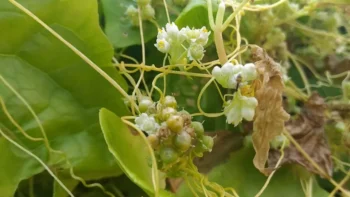
The plant appears as masses of thin, thread-like orange to yellow stems that form dense, tangled mats over whatever unfortunate host plants they encounter. These stems are leafless (who needs leaves when you’re stealing nutrients from someone else?) and can quickly smother entire shrubs, trees, and garden plants.
Where Giant Dodder Comes From and Where It’s Spreading
This botanical bully isn’t native to North America. Originally from tropical and subtropical regions of Asia, Africa, and Australia, giant dodder has been introduced to various parts of the world where it’s become a serious agricultural and ecological pest. In the United States, it has established populations in California, where it continues to cause headaches for farmers, gardeners, and land managers.
- Species observed
- No observations
Why Giant Dodder Is a Garden Nightmare
Let’s be crystal clear about why this plant has earned its noxious weed status:
- It kills other plants: Giant dodder wraps around host plants and inserts specialized structures called haustoria that tap directly into the host’s vascular system, stealing water and nutrients
- It spreads aggressively: Once established, it can quickly cover large areas, jumping from plant to plant
- It’s incredibly persistent: The seeds can remain viable in soil for years, waiting for the right conditions to sprout
- It has few natural enemies: In its introduced range, there are fewer natural predators to keep it in check
Growing Conditions (That You Should Avoid Creating)
Giant dodder thrives in warm climates, particularly in USDA hardiness zones 9-11. It prefers areas with plenty of host plants and can establish in a wide variety of habitats, from agricultural fields to natural areas to, unfortunately, home gardens. The plant doesn’t need soil to grow in the traditional sense – it just needs something to climb on and parasitize.
What to Do If You Encounter Giant Dodder
If you spot what looks like orange spaghetti covering plants in your area, don’t ignore it. Here’s what you should do:
- Don’t touch it with bare hands: Always wear gloves when handling potentially invasive plants
- Remove it immediately: Cut the dodder stems and remove all visible plant material
- Dispose of it properly: Bag it and throw it in the trash – never compost dodder material
- Monitor the area: Keep watching for new growth and remove it promptly
- Report it: Contact your local agricultural extension office or invasive species program
Better Alternatives for Your Garden
Instead of risking the introduction of this problematic parasite, consider these native climbing and trailing plants that will actually enhance your garden:
- Native honeysuckles: Such as trumpet honeysuckle (Lonicera sempervirens) for beautiful, pollinator-friendly flowers
- Native grape vines: Like California wild grape (Vitis californica) for wildlife habitat and fall color
- Virgin’s bower: (Clematis ligusticifolia) for delicate white flowers and fluffy seed heads
The Bottom Line
Giant dodder might sound exotic and interesting, but it’s a plant that causes real environmental and economic damage. Its parasitic lifestyle and aggressive spreading habit make it unsuitable for any garden or landscape. If you’re looking for unique, eye-catching plants for your garden, stick with native species that will support local wildlife and ecosystems rather than destroy them.
Remember, the best gardens are those that work in harmony with nature, not against it. Giant dodder is definitely working against it, so let’s keep this botanical troublemaker out of our landscapes and focus on plants that truly deserve a place in our gardens.