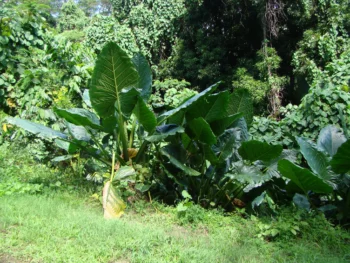
Giant Taro: A Dramatic Tropical Beauty for Your Garden
If you’re looking to add some serious tropical flair to your landscape, giant taro (Alocasia macrorrhizos) might just be the showstopper you’ve been searching for. With its enormous heart-shaped leaves and bold architectural presence, this perennial plant commands attention wherever it’s planted.
What Makes Giant Taro Special?
Giant taro lives up to its name with impressive foliage that can reach up to 3 feet in length. The glossy, deep green leaves emerge from thick, upright stems, creating a dramatic tropical silhouette that instantly transforms any space into an exotic paradise. While it may produce small flowers, this plant is all about those magnificent leaves.
Where Does Giant Taro Come From?
Originally hailing from Southeast Asia, particularly Malaysia and Indonesia, giant taro has made itself at home in warmer regions around the world. In the United States, you’ll find it growing in Florida, Hawaii, Texas, and various U.S. territories including Puerto Rico and Guam. This adaptable plant has naturalized in these areas, thriving in the warm, humid conditions it loves.
- Species observed
- No observations
Is Giant Taro Right for Your Garden?
Since giant taro isn’t native to North America, you might want to consider native alternatives that provide similar dramatic foliage while supporting local ecosystems. However, if you’re drawn to its unique beauty and tropical appeal, it can make a stunning addition to the right garden setting.
Consider giant taro if you:
- Live in USDA hardiness zones 9-11
- Want a bold focal point in your tropical or subtropical garden
- Have space for a large specimen plant
- Enjoy container gardening (it makes an excellent patio plant)
- Want to create a lush, exotic atmosphere
Growing Conditions and Care
Giant taro is somewhat particular about its growing conditions, but once you get it right, it’s relatively low-maintenance.
Light Requirements: This plant prefers partial shade to bright, indirect light. Too much direct sunlight can scorch those beautiful leaves, while too little light will result in smaller, less impressive foliage.
Water and Soil: As a plant with facultative wetland status, giant taro loves consistently moist soil but won’t tolerate soggy conditions. Plant it in well-draining soil that retains moisture, and water regularly to keep the soil evenly moist.
Humidity and Temperature: This tropical native thrives in warm, humid conditions. If you live in a drier climate, consider misting the leaves regularly or placing a humidifier nearby when grown indoors.
Planting and Care Tips
- Spacing: Give giant taro plenty of room to spread – it needs space to show off those impressive leaves
- Fertilizing: Feed with a balanced, slow-release fertilizer during the growing season
- Winter Care: In zones colder than 9, bring container plants indoors or treat as an annual
- Pruning: Remove yellowing or damaged leaves at the base to keep the plant looking its best
- Mulching: Apply organic mulch around the base to help retain moisture and regulate soil temperature
Design Ideas and Garden Roles
Giant taro works beautifully as a specimen plant where its dramatic foliage can be fully appreciated. It’s perfect for creating tropical-themed gardens, adding backdrop interest to smaller plants, or serving as a living sculpture in contemporary landscapes. Container growing is also an excellent option, allowing you to move the plant to optimal locations or bring it indoors during colder months.
Wildlife and Pollinator Considerations
While giant taro may produce small flowers, it’s not known for significant pollinator benefits. Since it’s not native to North America, it doesn’t provide the same ecosystem support as native plants. Consider incorporating native species alongside or instead of giant taro to better support local wildlife.
The Bottom Line
Giant taro is undeniably striking and can add instant tropical drama to the right garden setting. While it’s not native to North America, it’s not considered invasive either, making it a neutral choice for gardeners in appropriate climates. Just remember that this plant needs warm temperatures, consistent moisture, and protection from harsh sun to truly thrive. If you’re up for meeting its needs, giant taro can be a rewarding addition that brings a touch of the tropics to your outdoor space.